
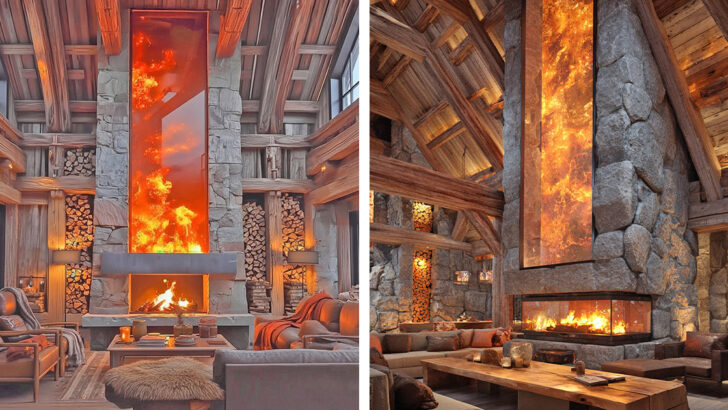
If you have ever stared into a campfire and felt time slow down, imagine what happens when that flame grows taller than your front door. Giant cabin fireplaces take everything we love about a hearth and scale it up into architecture. Think vaulted ceilings, raw stone, thick timber, and a column of living fire that climbs like a torch toward the rafters. In this guide, we unpack how to plan, design, and install giant cabin fireplaces, including the vertical styles people keep calling giant inferno fireplaces and vertical cabin fireplaces. By the end you will know what to ask for, what it costs, and how to keep everything safe, efficient, and jaw dropping.
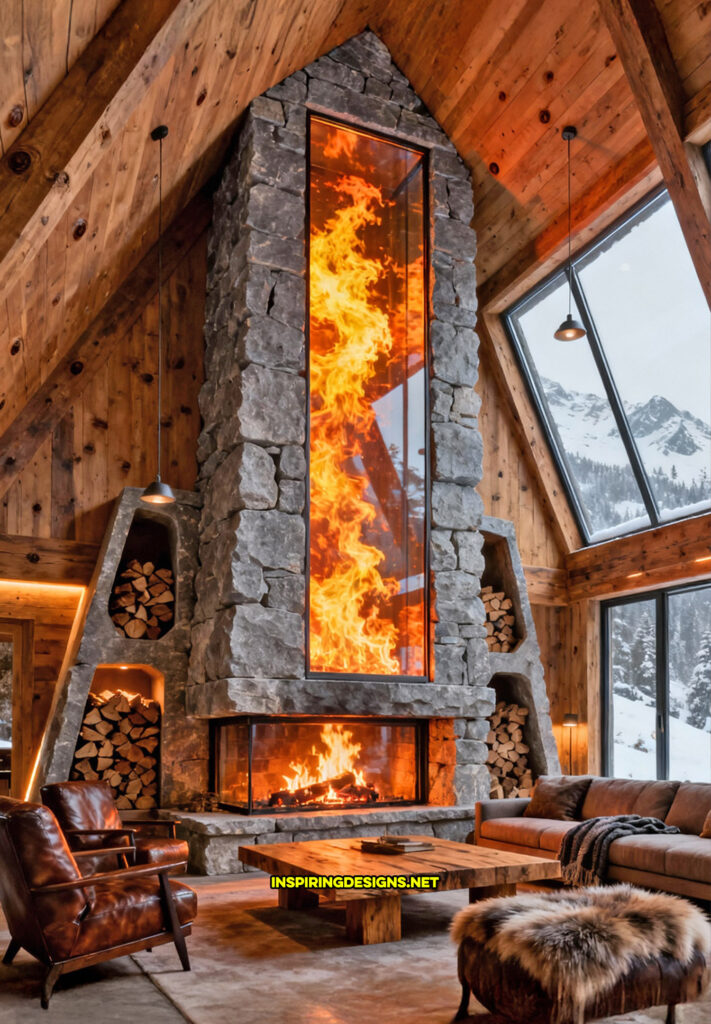
What Counts As A Giant Cabin Fireplace
A fireplace starts feeling giant once it dominates the sightline of a great room. That usually means one or more of the following:
- Firebox width of 48 inches or more
- Overall surround height above 9 feet, often 12 to 20 feet in vaulted spaces
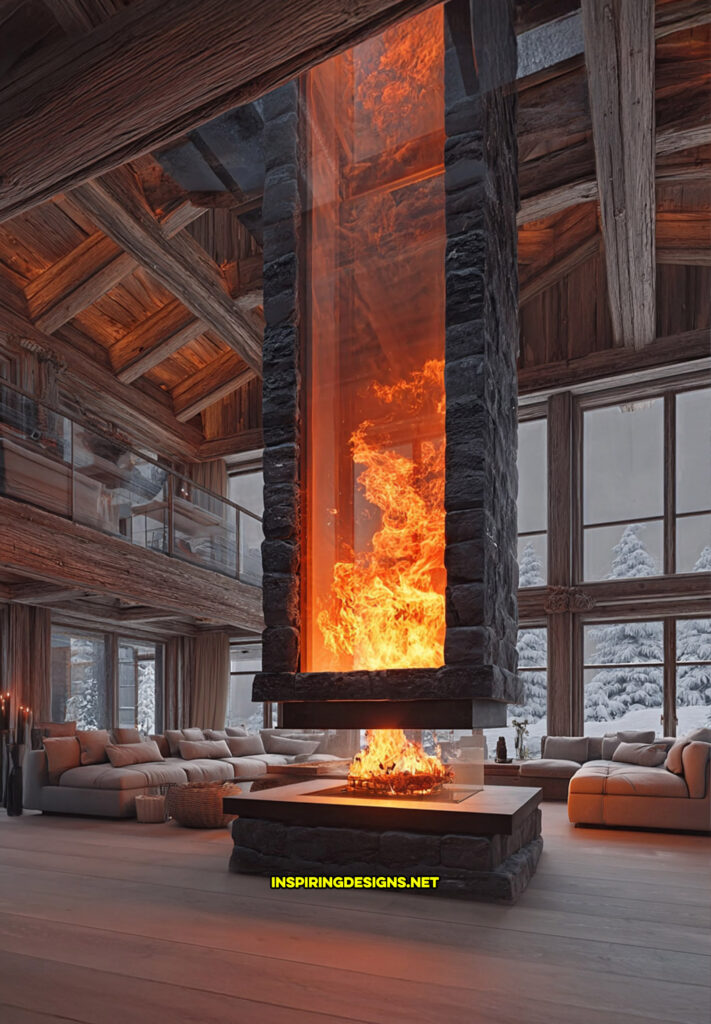
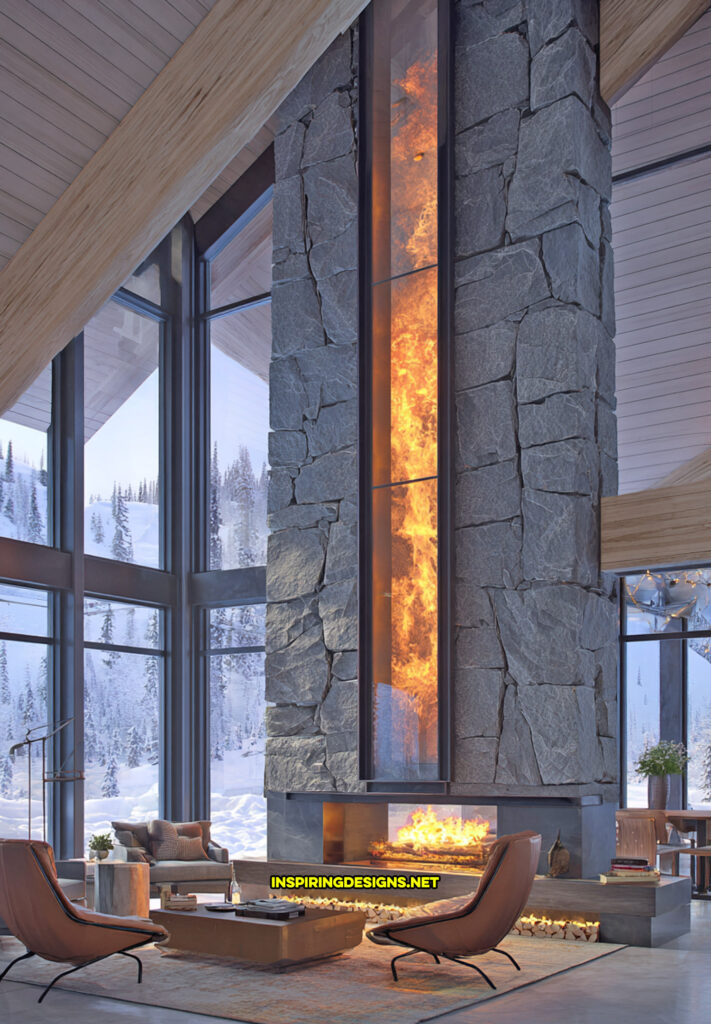
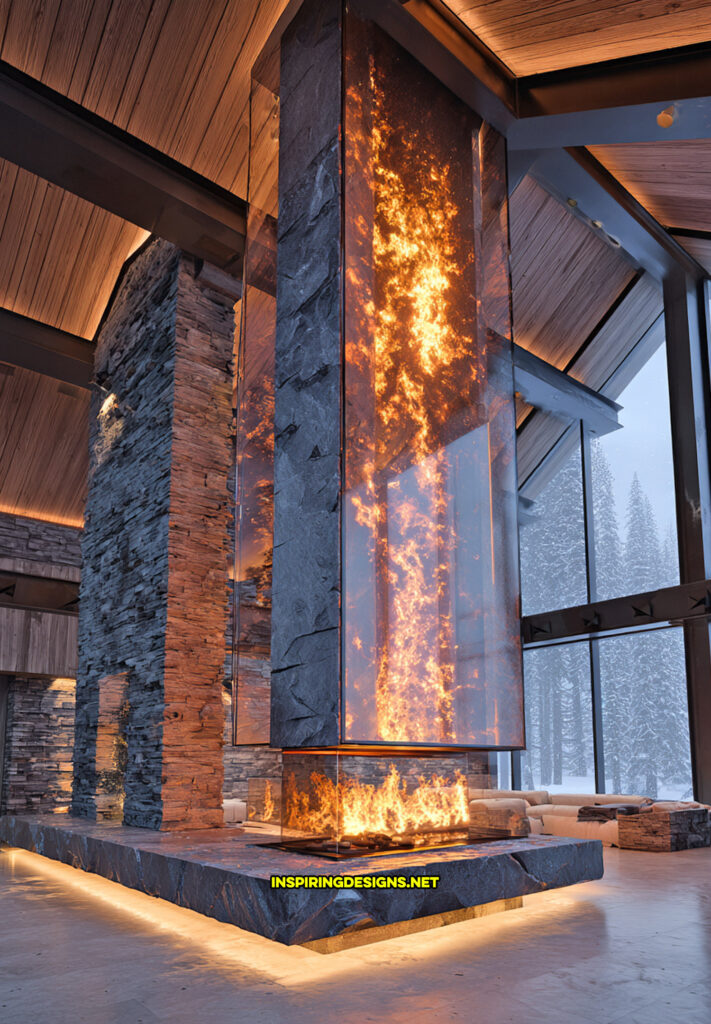
- A vertical glass chamber that carries flame upward for a dramatic tower effect
- Three or four sided viewing so the fire anchors an open plan
If the fire is the first thing guests mention before they notice the mountain view, you nailed the scale.
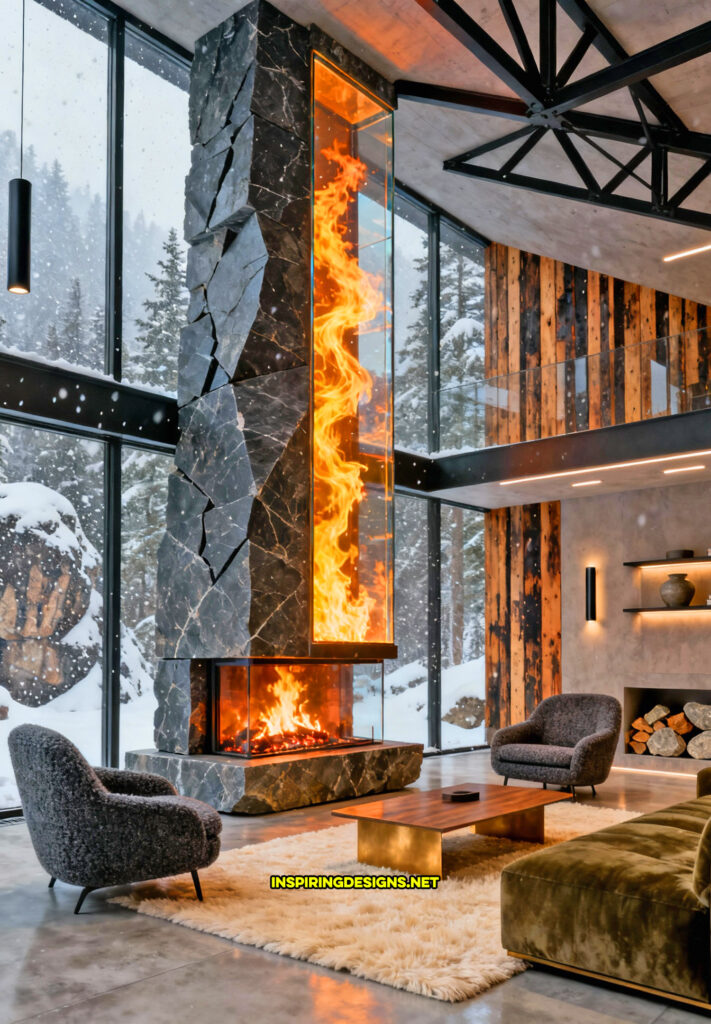
Why Go Big: Benefits Beyond Warmth
Bigger fireplaces do more than heat. Here is what makes them worth the investment:
- Visual drama that reads like custom architecture
- Stronger radiant output for large rooms with tall ceilings
- A natural gathering spot that improves how the space is used
- Higher perceived property value for luxury cabins and ski homes
- Design flexibility from rustic stone to crisp modern glass
Large fireplaces become the heart of the home. People orbit them. Conversations lengthen. Cocoa tastes better. It is science or at least it feels like it.
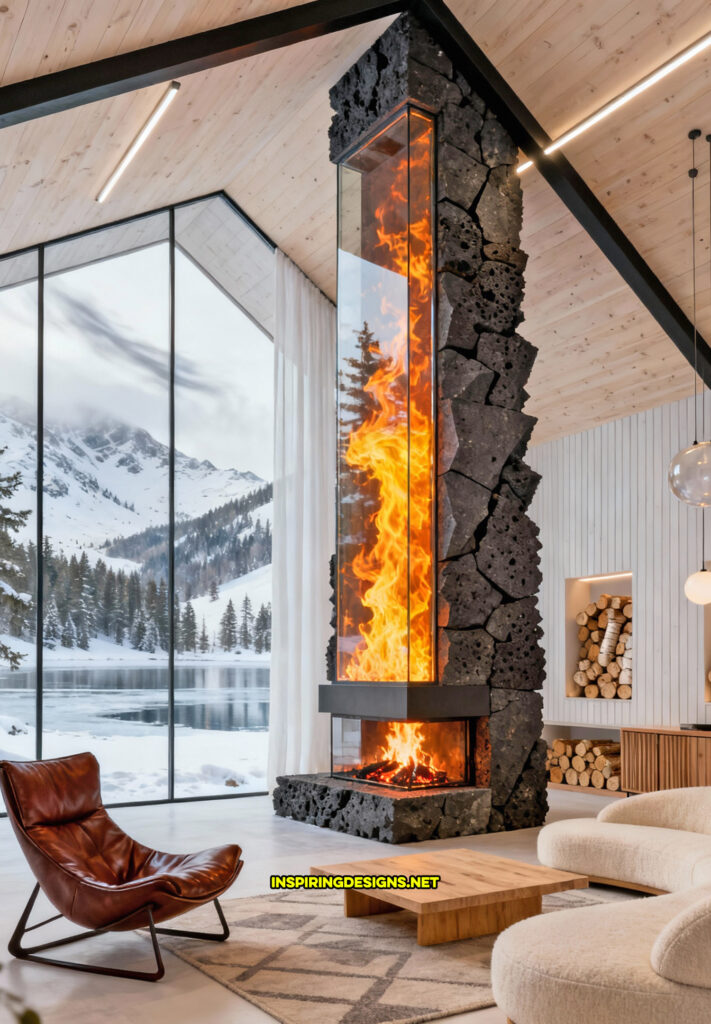
The Vertical Inferno Look
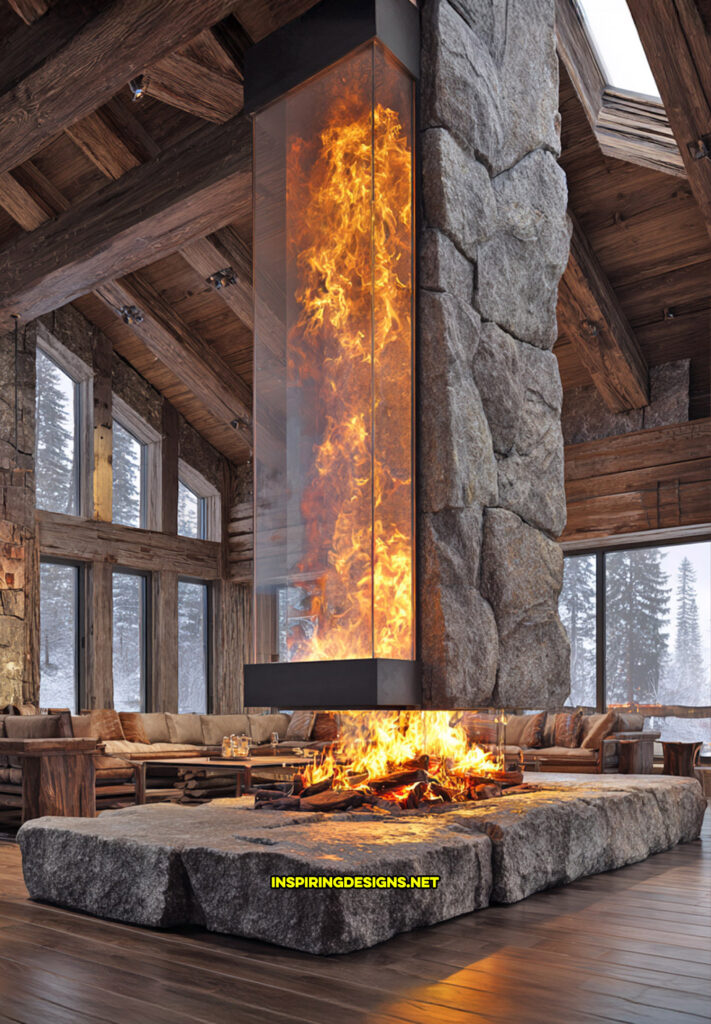
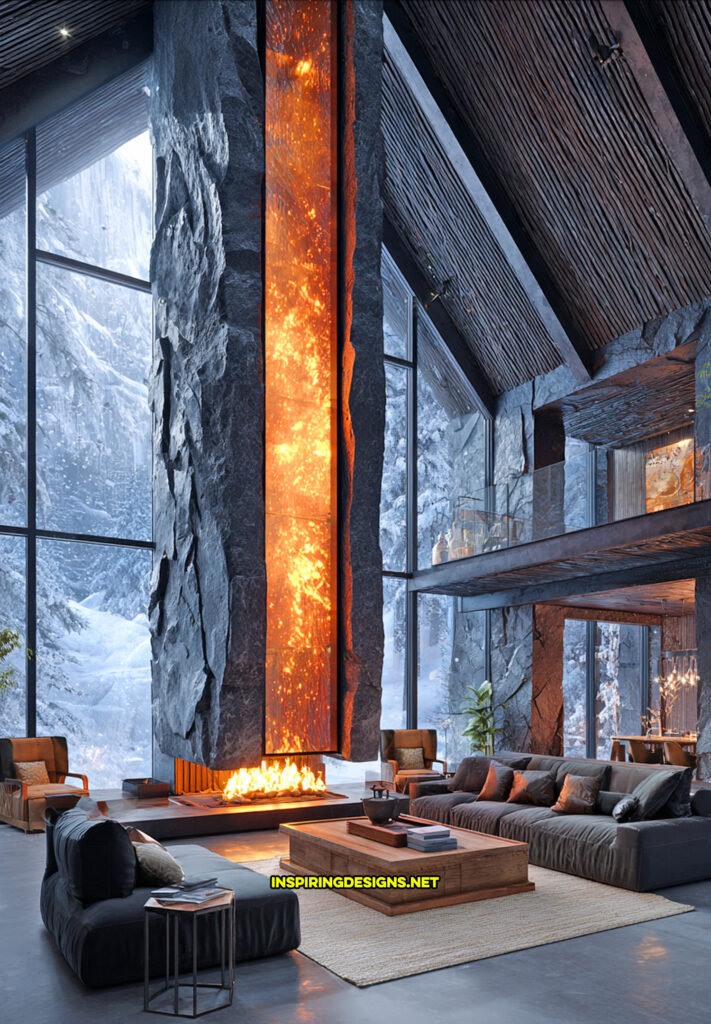
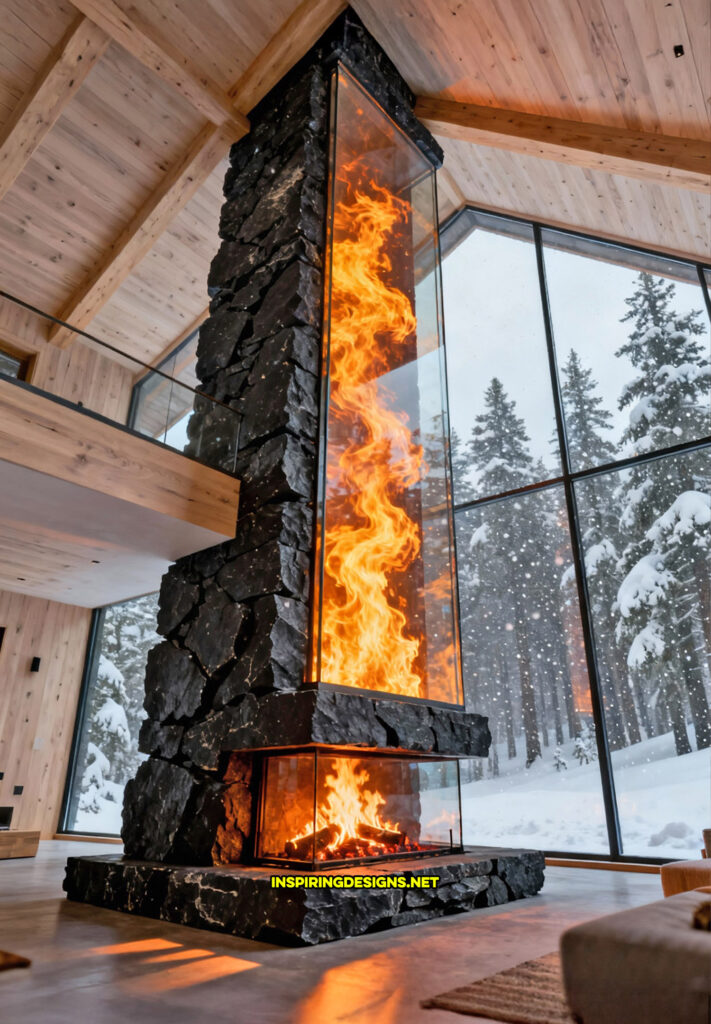
Searches for vertical cabin fireplaces are rising because the look is irresistible. The concept is simple. Put a traditional firebox on the bottom, then continue the flame effect upward inside a tall glass chamber. The result is a column of fire that behaves like sculpture.
Here is how designers achieve that statement:
- Heat resistant glass, often borosilicate or laminated tempered, rated for high temperatures
- A clean lined metal frame in blackened steel or matte aluminum
- Draft management that keeps glass clear and pulls the flame upward
- Stonework that grounds the tower and ties everything to the landscape
This style works beautifully in A-frame cabins, modern chalets, and timber lodges because the vertical lines echo the roof pitch.
Fuel Choices For Giant Inferno Fireplaces
You have four main options. Each can work at scale, but they shine in different scenarios.
| Fuel Type | Heat Output | Realism | Venting | Best For | Notes |
|---|---|---|---|---|---|
| Wood burning | Very high | 10/10 crackle and aroma | Full chimney required | Authentic rustic cabins | Requires dry wood and regular ash cleanout |
| Natural gas or propane | High with strong control | 8/10 with modern burners | Direct vent or chimney | Primary heat plus convenience | Remote or smart control for flame height and intensity |
| Ethanol | Moderate | 7/10 with clean flame | Ventless | Remodels where venting is tough | Great for occasional use, minimal construction impact |
| Electric log or ribbon | Moderate and zoned | 6/10 but improving | None | Condos and secondary spaces | Safe, simple install, excellent mood lighting |
If you want the biggest visual punch with serious heat, wood or gas remains the go-to for giant cabin fireplaces. Ethanol and electric are perfect for design-first projects where venting is limited or you want easy on and off ambiance.
Stone That Speaks Mountain
The surround makes the scale believable. For giant installations, choose materials that carry visual weight:
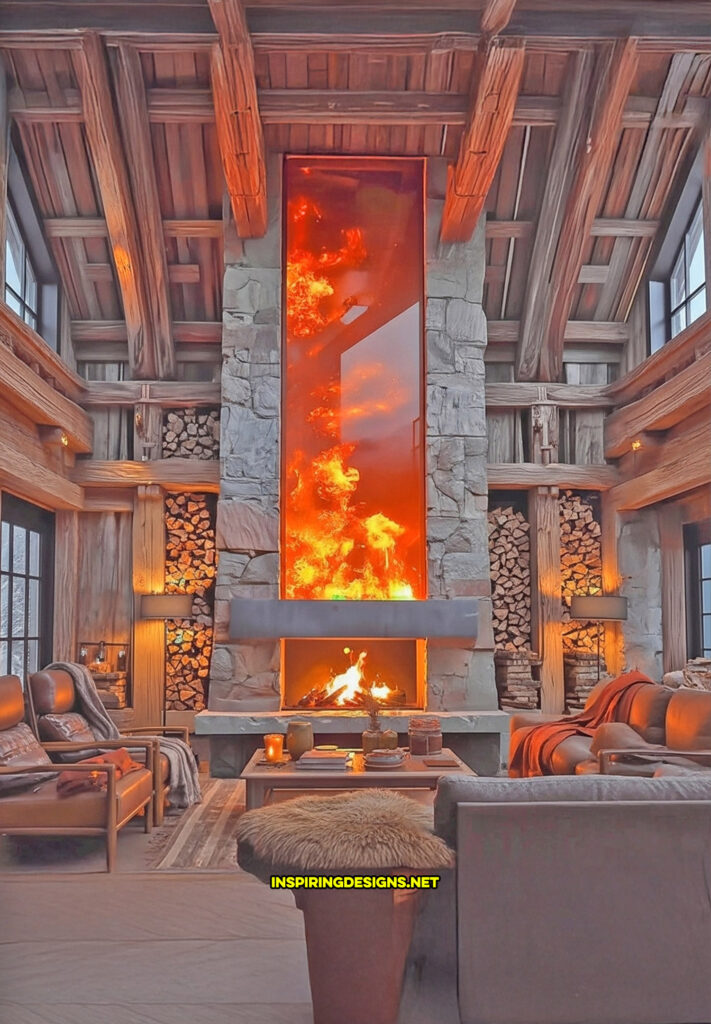
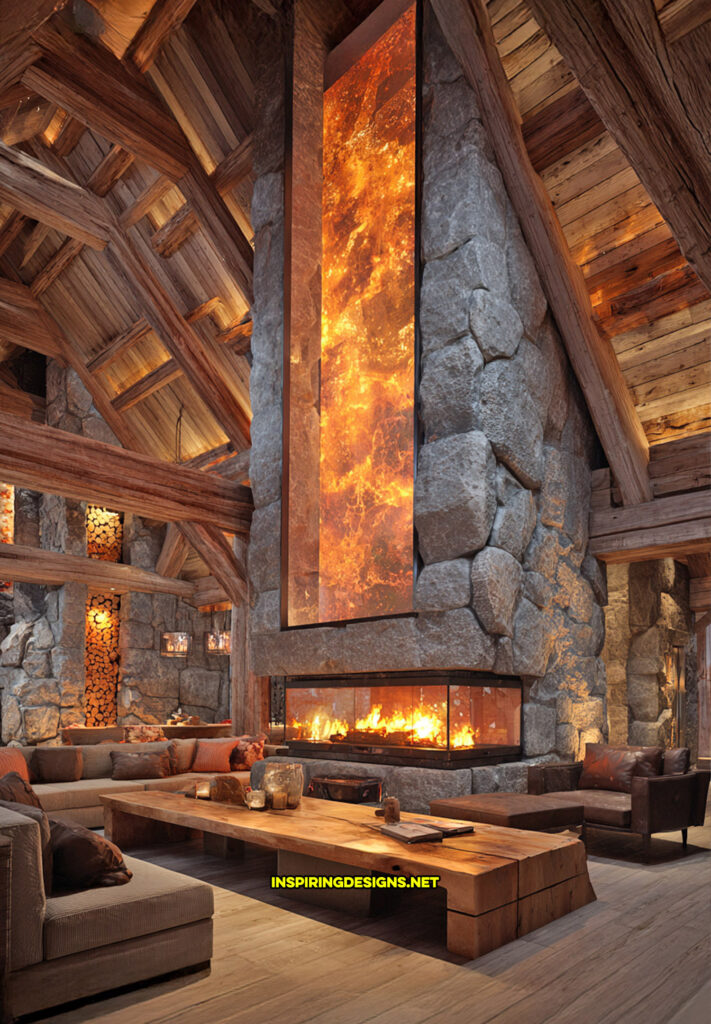
- Fieldstone with rugged faces and deep grout shadows
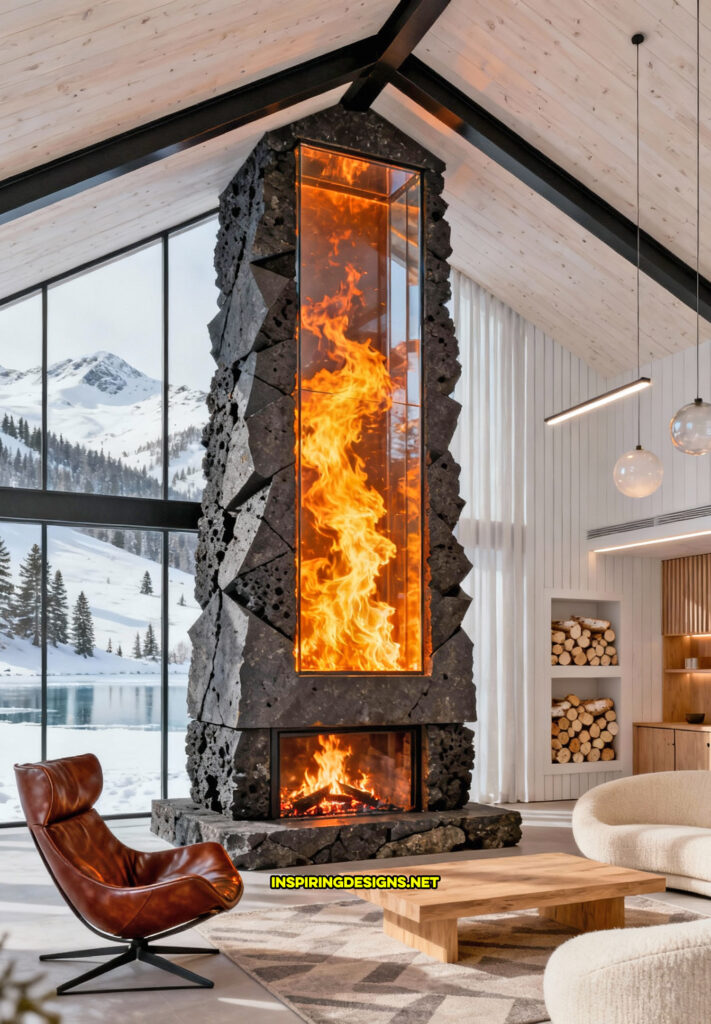
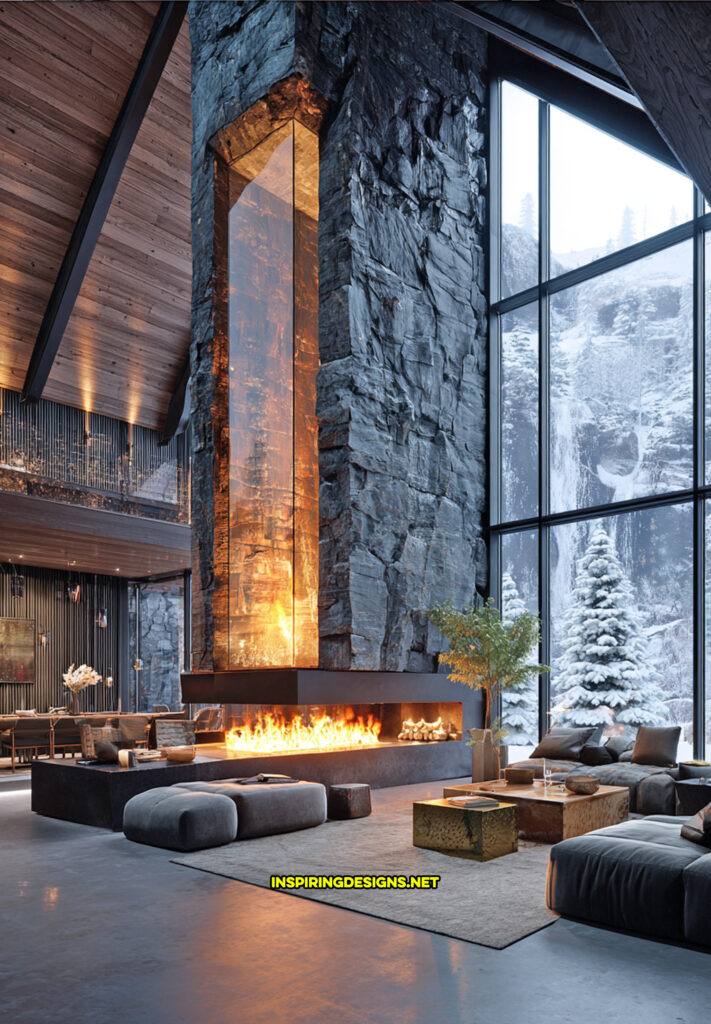
- Basalt or slate with darker tones that amplify the glow
- Thick hearth slabs of granite or poured concrete that double as benches
- Integrated alcoves for stacked logs, which add pattern and practicality
A consistent rule of thumb is to step up the thickness of stone as the fireplace grows. Four to eight inches of depth gives the mass and shadow that large rooms demand.
Layouts That Wow From Every Seat
Giant cabin fireplaces come in several layouts. Match the style to the room and the view.
- One sided monumental wall. A towering stone chimney with a generous opening and a vertical glass element above.
- Three sided peninsula. Great for dividing open plans while keeping sightlines clear.
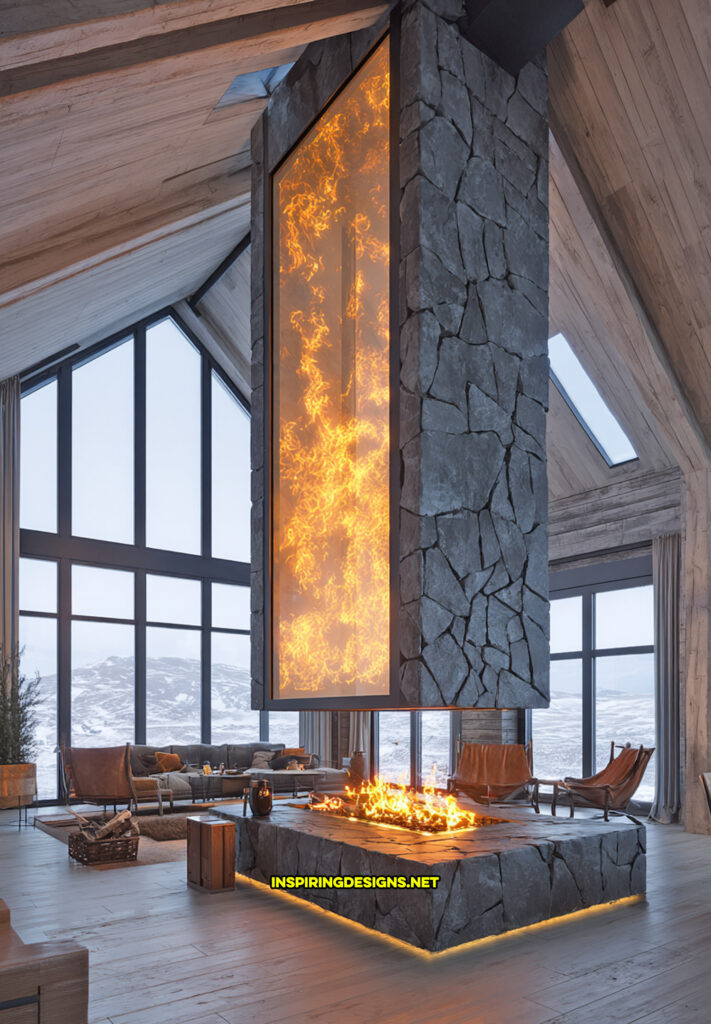
- Four sided island. The ultimate showpiece, especially with a suspended hood and a stone plinth that visitors can gather around.
- Corner view. A smart space saver with wraparound glass that still delivers grand scale.
For rooms with mountain panoramas, float the fireplace slightly off center. That keeps the view open while giving the fire the star treatment it deserves.
Sizing The Flame To The Room
Oversizing heat output can roast a room, while undersizing makes a giant look timid. Here is a quick way to aim:
- Measure the cubic footage of the space, including lofts open to the great room.
- For insulated cabins in cold climates, target 30 to 40 BTU per square foot as a starting point for gas units.
- For wood burning builds, size the opening width and height to match the chimney and draft calculations from your installer.
- Consider a hidden fan system that redistributes heat to adjoining rooms.
A vertical glass chamber does more than look good. It improves convection and keeps heat moving up and out into the space, which is helpful under cathedral ceilings.
Smart Controls That Feel Like Magic
Modern systems let you adjust more than on and off. Popular options include:
- App or voice control for ignition, fan speed, and lighting
- Programmable scenes for relaxed evening embers or high drama for parties
- Eco mode that reduces fuel consumption once the room reaches temperature
- Safety sensors that keep glass temperatures in check and shut the system down if anything goes out of spec
Pair the fire with subtle LED uplighting or backlighting along the stone edges. When the flames fade, the glow remains and the room stays cozy.
Safety First Without Killing The Vibe
Giant does not mean risky. Follow these best practices and you will enjoy the spectacle with peace of mind:
- Work with a licensed installer who can calculate chimney size and draft correctly
- Use heat rated glass and gaskets with a manufacturer approved frame system
- Maintain clearances to beams, mantels, and soft furnishings
- Add a dedicated make-up air supply in very tight envelopes
- Install carbon monoxide and smoke detectors on the same level as the fireplace
- Keep a matching stone or steel hearth extension to catch sparks on wood burning builds
Clean the glass and service the system before each winter. A few hours of maintenance keeps a big feature beautiful.
What It Costs To Go Giant
Budgets vary by region, but realistic ranges help planning. Expect the following ballparks for complete projects that include the unit, venting, stonework, labor, and finish carpentry:
- Extra large gas unit in a stone surround: 18,000 to 45,000
- Monumental wood burning masonry with chimney: 35,000 to 95,000
- Four sided island with custom glass tower: 60,000 to 150,000 and up
- Electric or ethanol statement builds with architectural cladding: 8,000 to 35,000
Add more for structural steel, scaffolding, crane time for tall glass modules, and integration with home automation. If you are building new, plan the fireplace and flue path early so framing accommodates the weight and clearances.
Installation Timeline And What To Expect
Large fireplaces arrive in pieces. A typical sequence looks like this:
- Design and engineering review with site measurements
- Structural prep, blocking, and platform base poured or placed
- Firebox set and flue run, or chimney built for masonry projects
- Glass chamber and frame installed, often with lift assistance
- Stone cladding and millwork completed
- Commissioning, pressure tests for gas, and first burn
Great rooms get dusty during stonework, so cover furniture and schedule final flooring or paint after the fireplace is complete.
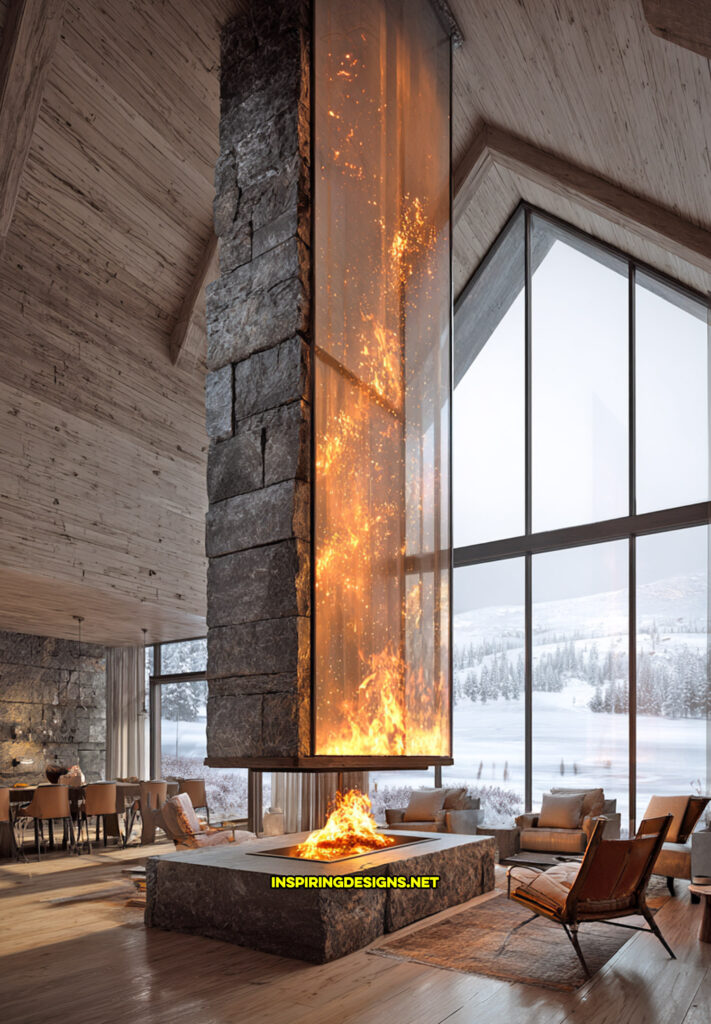
Custom Touches That Make Yours Unforgettable
Your fireplace can be as unique as your cabin. Here are ideas that always earn compliments:
- Bronze or smoke tinted glass that sets the mood
- Hand hammered steel bands that frame the vertical chamber
- Live edge mantels reclaimed from local timber
- Etched glass panels with a topographic map of your mountain
- A platform base that acts as seating and hidden log storage
- Seasonal lighting scenes that adjust color temperature for winter and summer
If you prefer a minimalist look, keep the frame pencil thin and let the flame and stone do all the talking.
Frequently Asked Questions
Can a giant fireplace really heat a big open plan room?
Yes. With correct sizing and a convection path that leverages the height of the chamber, many systems comfortably heat 1,500 to 4,000 square feet. Add a discreet fan kit to push warmth to lofts or bedrooms.
Will soot stain the glass on vertical cabin fireplaces?
Proper draft and clean burning fuel keep glass clear. Periodic cleaning with manufacturer approved products brings back that crystal look.
Are there options for areas with burn restrictions?
Gas, electric, and ethanol units are widely approved where wood burning is limited. Always check local codes.
Do I need extra structure under a giant fireplace?
Often yes. Heavy stone and large hearth slabs can weigh thousands of pounds. Your builder can reinforce joists or pour a slab to support the load.
The Takeaway
Giant cabin fireplaces are part heating solution, part sculpture, and all conversation starter. Whether you want classic lodge vibes or a slick modern tower, the formula is the same. Choose the right fuel, give the stone real heft, keep the glass pristine, and treat draft and safety with respect. Do that and your giant inferno fireplace will become the heartbeat of your mountain home.
Quick Planning Checklist
- Decide on fuel type and rough BTU target
- Sketch your preferred layout and viewing sides
- Choose stone species and hearth material
- Confirm structure for weight and clearances
- Coordinate venting or chimney path early
- Add smart controls and lighting for after dark magic
- Book a certified installer and schedule annual service
Build it once, build it right, and your giant cabin fireplace will turn winter into your favorite season.
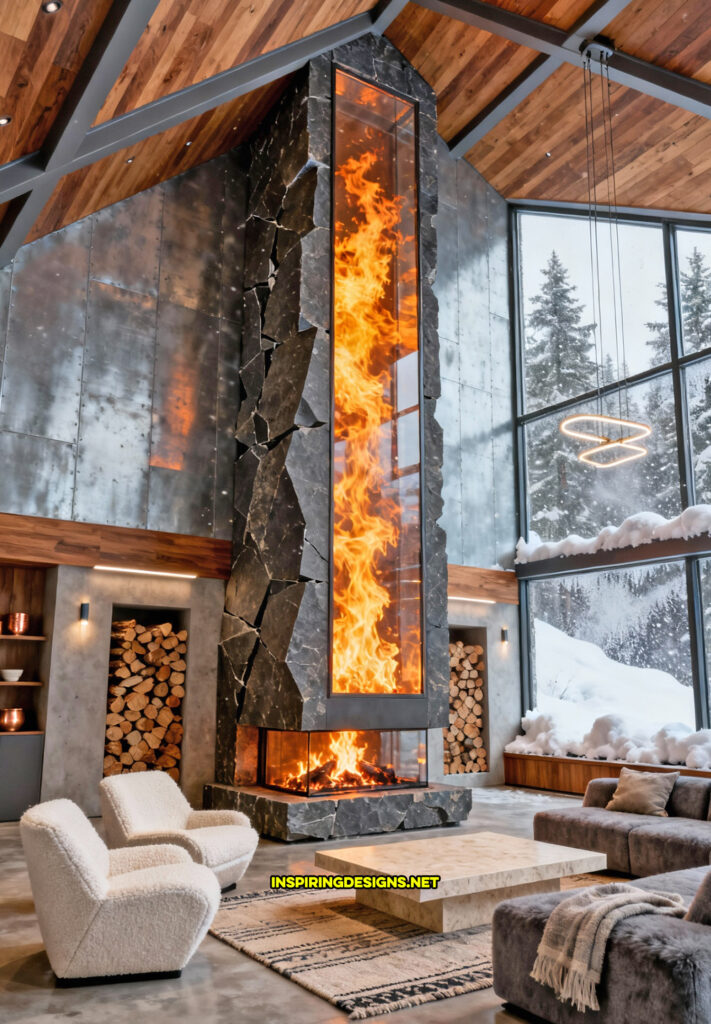
Lets check out a pros vs cons list to see if one of these massive cabin fireplaces is right for home!
| Aspect | Pros | Cons |
|---|---|---|
| Visual impact | Show-stopping focal point that elevates the entire room | Can overpower small spaces if scale is misjudged |
| Heat output | Warms large great rooms and open plans effectively | Risk of overheating without proper sizing or fans |
| Property value | Signals luxury and custom craftsmanship to buyers | High upfront cost with uncertain ROI in some markets |
| Layout options | One sided, three sided, four sided, or island for flexible placement | Complex designs increase engineering and install time |
| Vertical glass chamber | Dramatic flame column with clear sightlines | Requires regular glass cleaning and careful draft control |
| Materials and finishes | Natural stone, steel, and custom glass create timeless character | Heavy materials demand structural reinforcement |
| Smart controls and lighting | App control, presets, and ambient LEDs enhance usability | More electronics to maintain and potential compatibility issues |
| Fuel choices | Wood or gas deliver authentic flame and strong heat | Wood needs storage and cleanup, gas needs safe venting and permits |
| Comfort and gathering | Becomes a natural hub that improves how the room is used | Large hearth clearances reduce nearby furniture options |
| Installation and service | Modular systems allow precision fit and certified setup | Longer timelines, possible crane access, and annual servicing costs |
Related posts:
 These Giant Dragon Fireplaces Will Make Your Home the Talk of the Kingdom
 These Giant Disney and Hogwarts Castle Shaped Fireplaces Turn Your Home into an Enchanted Realm
 These Giant Animal Shaped Fireplaces Will Leave You Stunned!
 These Giant Fireplaces Are Shaped Like Dogs, Cats, and Various Other Animals