Parents already carry snacks, wipes, bottles, toys, blankets, spare clothes, and enough emergency crackers to survive a small apocalypse. The last thing they need is separate equipment for every type of outing. That is where the convertible stroller bicycle rolls into the picture.
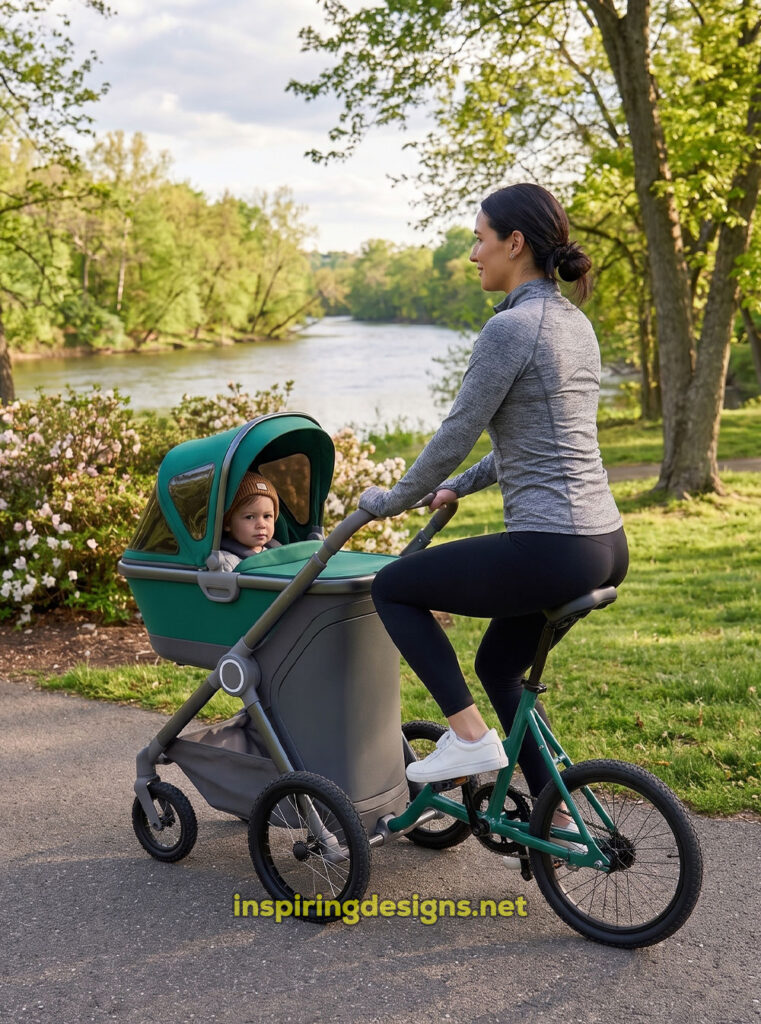
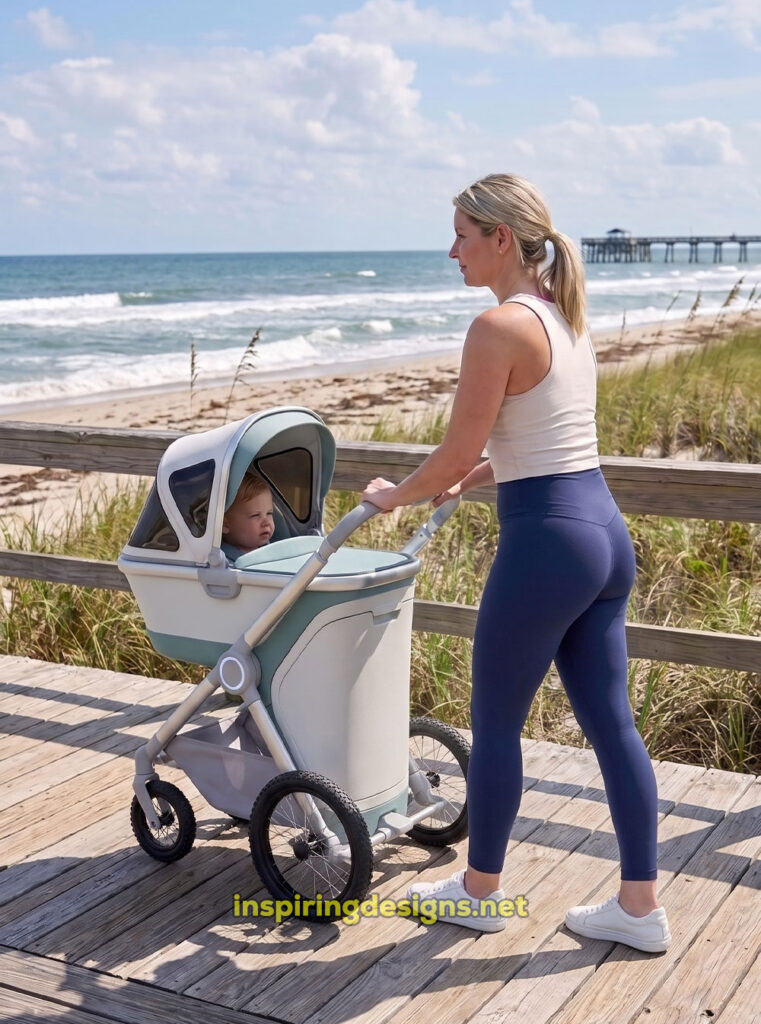
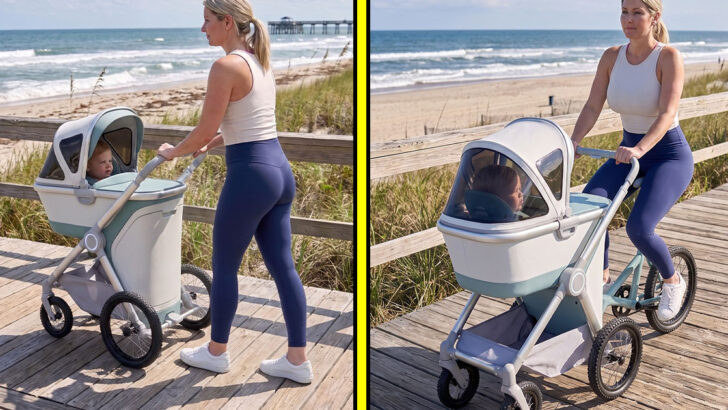
This two-in-one family carrier works as a comfortable push stroller for everyday walks, shopping trips, parks, and pedestrian areas. When the route gets longer, an integrated bicycle assembly unfolds from the rear, creating a stable pedal-powered carrier without removing the passenger cabin or transferring the child to another seat.
In other words, it strolls when you want to stroll and rolls when you are ready to put the pedal to the parent-metal.
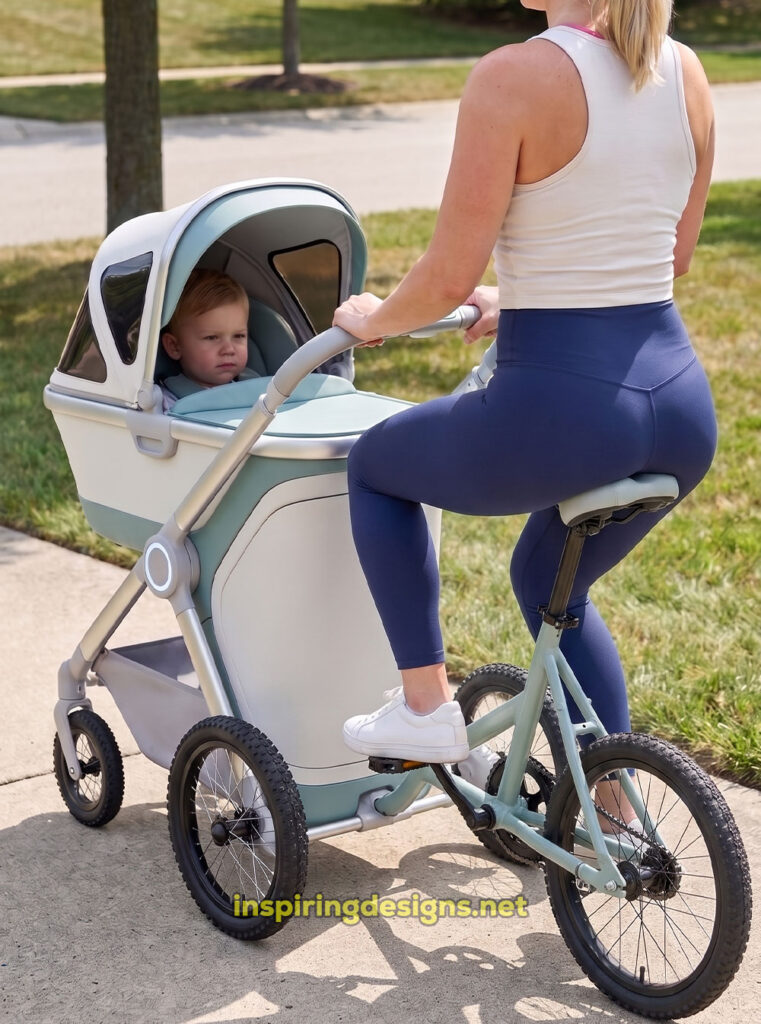
The design combines a deep, enclosed child cabin with large stroller wheels, a foldaway bicycle frame, an adjustable adult saddle, pedals, brakes, steering controls, storage, and weather protection. It also comes in multiple sizes, wheel packages, cabin designs, and color combinations, making it easier to choose a model that fits both the family and the daily routine.
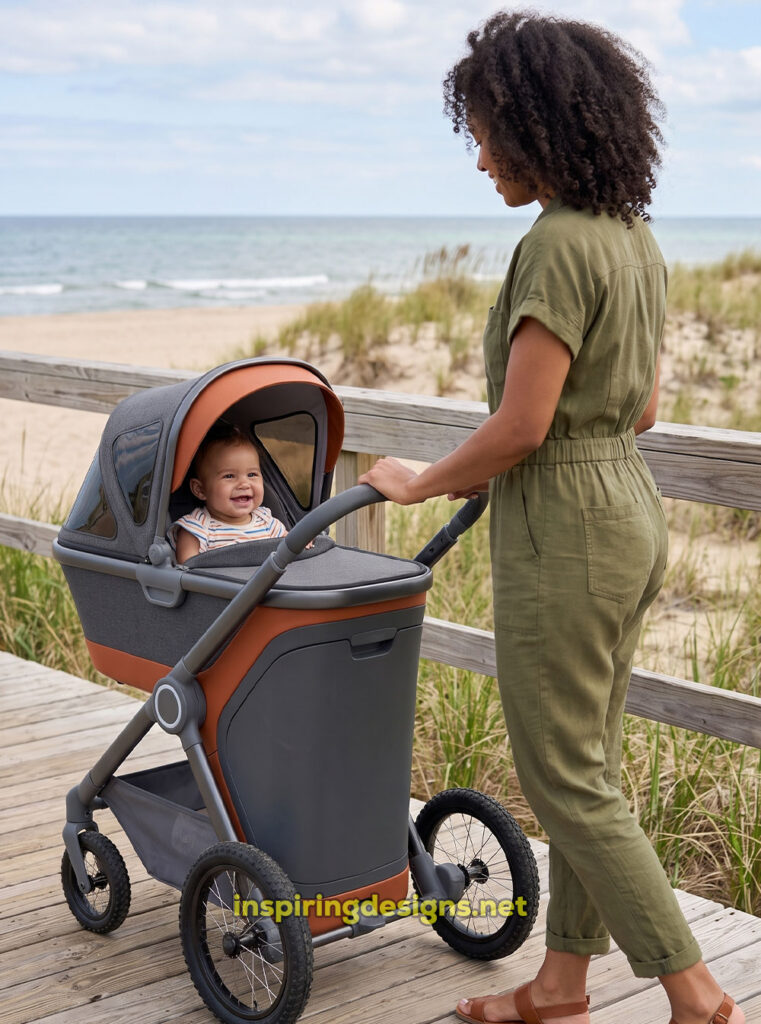
What Is a Convertible Stroller Bicycle?
A convertible stroller bicycle is a child transportation system that changes between a conventional push stroller and a pedal-powered bicycle carrier. Unlike a standard bike trailer, the passenger cabin remains in front of the adult in both modes.
That front-mounted position helps the caregiver keep the child visible while walking or riding. It also gives the passenger a clear view of the route ahead, which is considerably more exciting than staring at the back of a bicycle seat for half an hour.
The child sits inside a rigid, deep-sided cabin with a padded interior, adjustable restraint system, protective canopy, ventilation panels, and a removable lower apron. The surrounding structure provides more shelter than an exposed bicycle seat while maintaining the familiar comfort of a premium stroller.
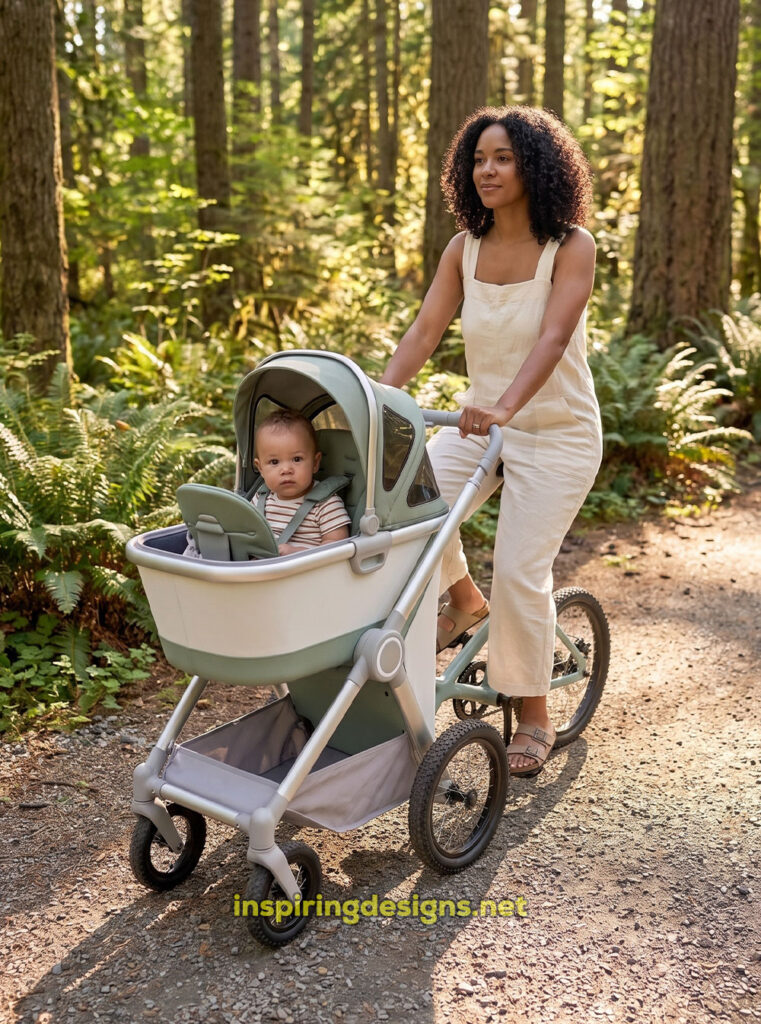
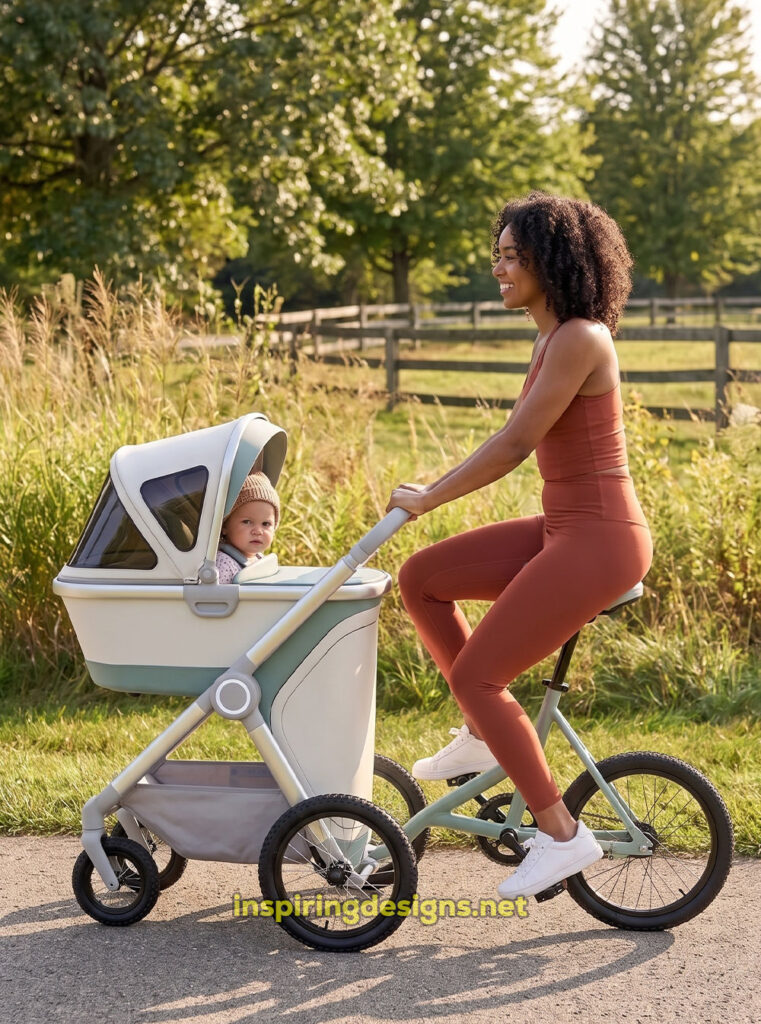
In stroller mode, the bicycle components remain folded inside a protected rear docking area. The adult uses the padded push bar to steer the unit normally. In bicycle mode, the rear frame swings outward, the saddle rises, the pedals lock into position, and the same push bar becomes the riding handlebar.
It is one product with two personalities. Fortunately, neither personality throws peas on the kitchen floor.
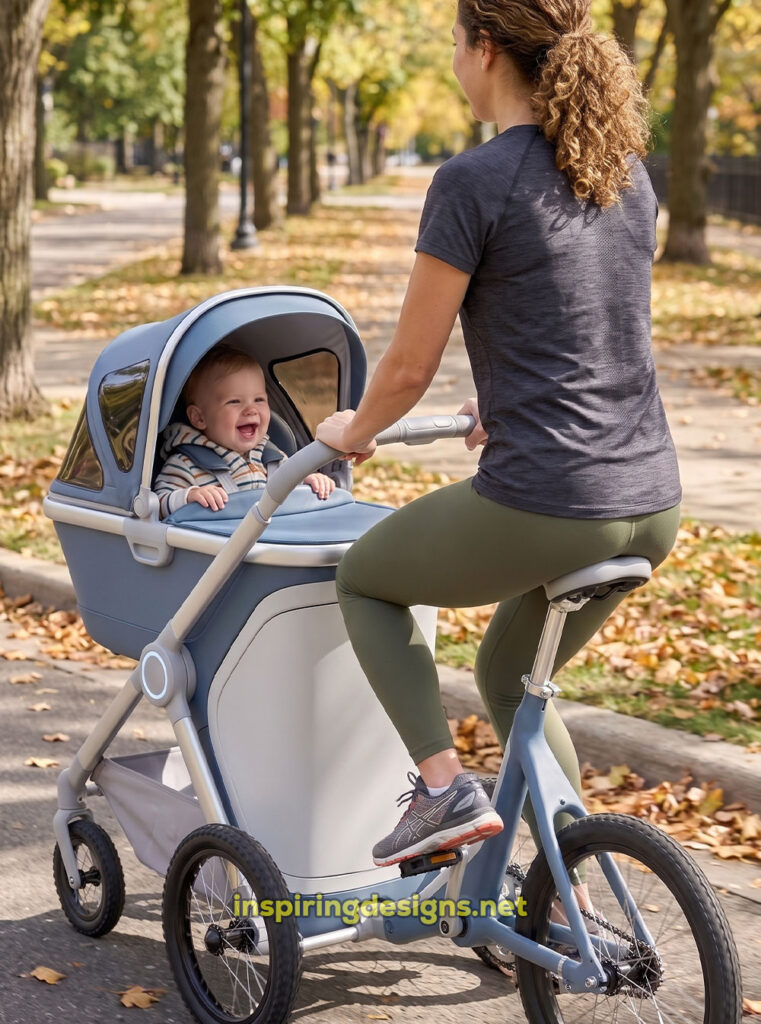
How the Stroller Converts Into a Bicycle
The conversion system is built into the rear section of the stroller chassis. The child cabin stays attached throughout the process, so there is no need to lift, move, or rebuckle the passenger.
The changeover takes place while the stroller is stationary and the parking brake is engaged. Reinforced pivots, locking braces, and visual indicators help confirm that the frame is properly positioned before riding begins.
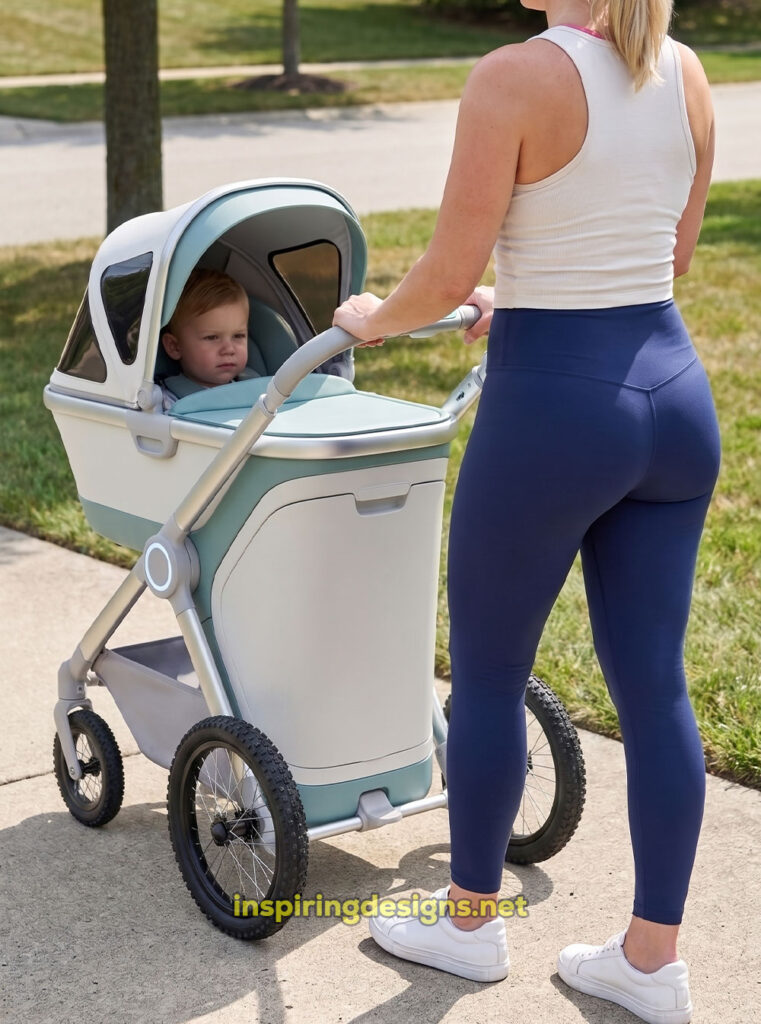
The conversion process follows a straightforward sequence:
- Engage the central parking brake and place the stroller on a level surface.
- Release the protected latch on the rear bicycle docking compartment.
- Rotate the connected bicycle subframe outward and downward from beneath the cabin.
- Extend the telescoping saddle post and adjust it to the rider’s preferred height.
- Fold the crank arms and pedals into their operating positions.
- Secure the cross-brace beneath the cabin and confirm that the frame-lock indicators show a complete connection.
Once deployed, the bicycle wheel aligns with the center of the stroller chassis. The larger stroller wheels continue supporting the passenger cabin while the rear drive wheel provides pedal-powered movement.
Returning to stroller mode follows the same steps in reverse. The pedals fold inward, the saddle retracts, the brace releases, and the bicycle frame rotates back into its rear storage compartment. The result is a tidy stroller configuration without a loose bike attachment wagging behind it like an overexcited mechanical tail.
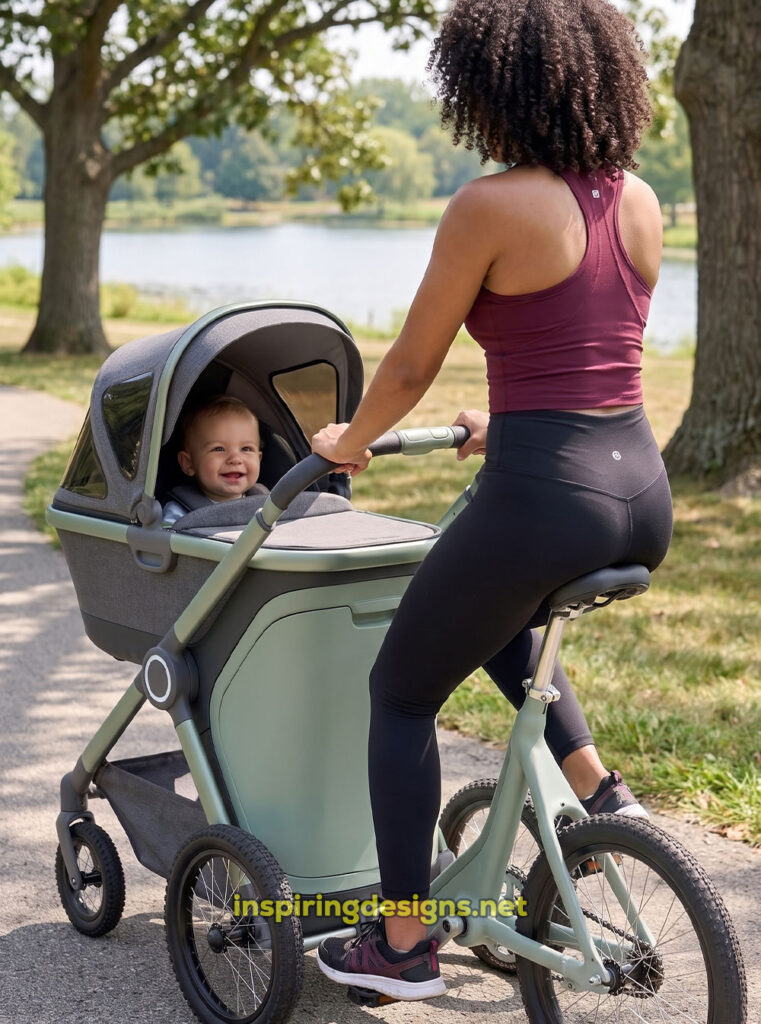
A Protected Passenger Cabin Built for Comfort
The passenger area is one of the defining features of the convertible stroller bicycle. Instead of placing the child in an exposed rear seat or low trailer, the design uses a sculpted front cabin with raised sides and a rigid lower shell.
The deep seating area surrounds the passenger’s hips, legs, and torso. A height-adjustable five-point harness secures the child using padded shoulder straps, side anchors, and a central buckle integrated into the seat.
Inside, removable bolsters and a contoured backrest allow the cabin to support different ages and seating positions. Younger passengers can use a more reclined arrangement, while older children can sit upright and enjoy the scenery.
The wraparound canopy extends over the cabin and includes a panoramic front panel with tinted side sections. Ventilation openings help air move through the interior, while the canopy provides protection from bright sunlight, wind, and light weather.
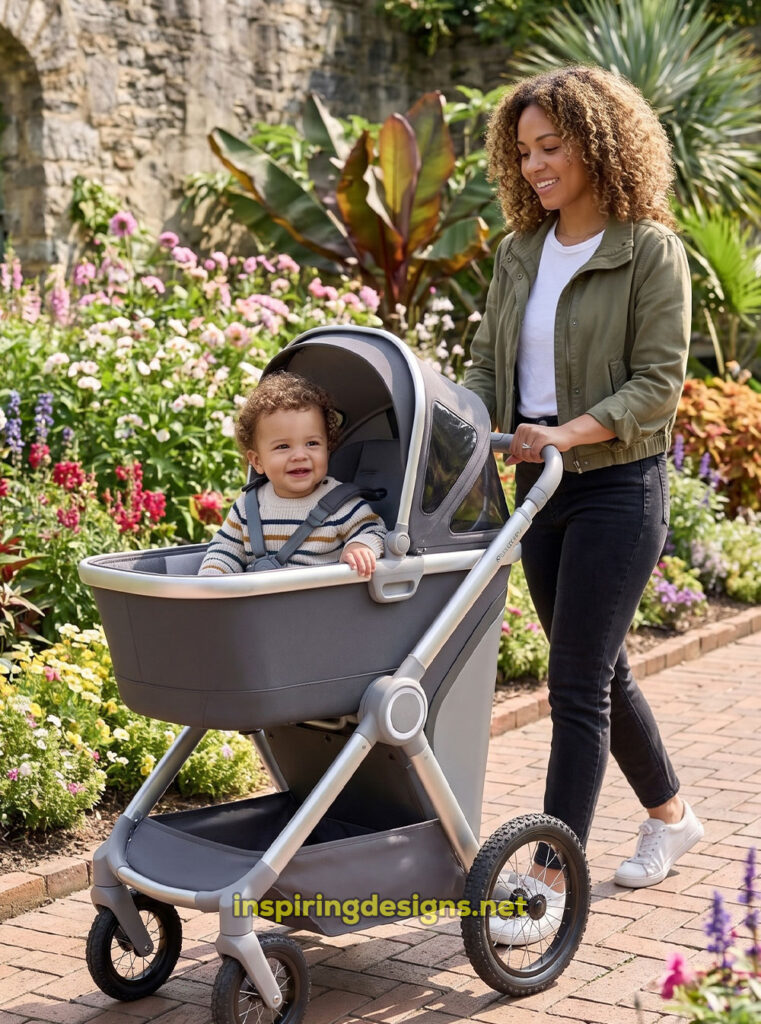
A removable padded apron covers the lower cabin opening and helps shield the child’s legs. During warmer outings, it folds back or detaches to increase airflow.
The cabin rim also features soft-touch padding, eliminating hard exposed edges around the passenger area. This creates a comfortable place for little hands to rest while the family cruises through the neighborhood in what looks suspiciously like a tiny first-class travel pod.
Steering, Braking, and Riding Position
The wide push bar serves as the main control point in both configurations. In stroller mode, it functions as an adjustable handle. In bicycle mode, it becomes the riding handlebar.
A steering linkage connects the handlebar to the front wheel assembly. When bicycle mode is selected, the front casters lock into a forward-oriented arrangement that responds to movements at the bar. This provides controlled directional changes without requiring a separate bicycle steering column.
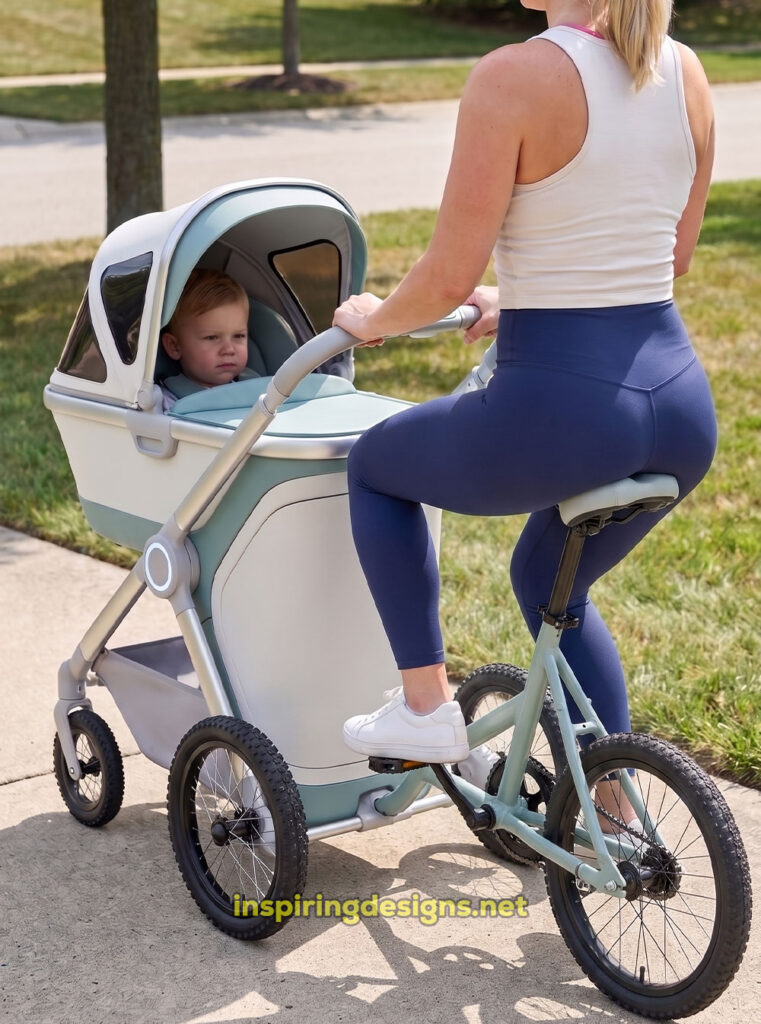
Brake levers sit beneath the handle grips. One controls the rear bicycle wheel, while the second adds braking force through the stroller wheel system. The foot-operated parking brake remains available for loading, unloading, adjustments, and conversion.
The riding geometry keeps the adult in a relaxed, upright position. The adjustable saddle, broad handlebar, low step-through frame, and rear pedal placement allow the rider to sit comfortably while maintaining a clear view around the passenger canopy.
The frame also keeps the pedals behind the child cabin and outside the larger support wheels. That reduces the chance of bumping the stroller body during each rotation. Nobody wants a relaxing family ride interrupted by a surprise game of ankle pinball.
Convertible Stroller Bicycle Sizes and Dimensions
Different families need different cabin sizes, wheel packages, and storage footprints. Compact versions suit tighter urban spaces, while extended cabins provide additional interior room and reclining space. Larger all-terrain models use wider frames and more substantial tires for maintained paths and uneven pavement.
| Feature | Approximate Range |
|---|---|
| Stroller-mode length | 43 to 50 inches |
| Bicycle-mode length | 67 to 77 inches |
| Overall width | 26 to 31 inches |
| Handle height | 39 to 46 inches |
| Folded height | 21 to 27 inches |
| Passenger cabin length | 31 to 36 inches |
| Passenger cabin width | 15 to 19 inches |
| Front wheel diameter | 8 to 10 inches |
| Support wheel diameter | 14 to 17 inches |
| Bicycle drive wheel diameter | 18 to 22 inches |
| Adjustable saddle height | 29 to 39 inches |
| Storage capacity | 20 to 30 liters |
| Product weight | 52 to 70 pounds |
The exact dimensions vary by cabin design, tire package, drivetrain, and frame size. Quick-release wheels are available on selected configurations to make transport and storage more manageable.
Wheels Designed for Walking and Riding
The multi-wheel layout provides stability in both operating modes. Two smaller front wheels handle maneuvering, while larger support wheels carry the main passenger cabin. When the bicycle assembly is deployed, a single rear drive wheel adds pedal-powered movement.
In stroller mode, the front wheels swivel freely for tight turns in shops, parks, and crowded walkways. They can also lock straight for longer routes or rougher surfaces.
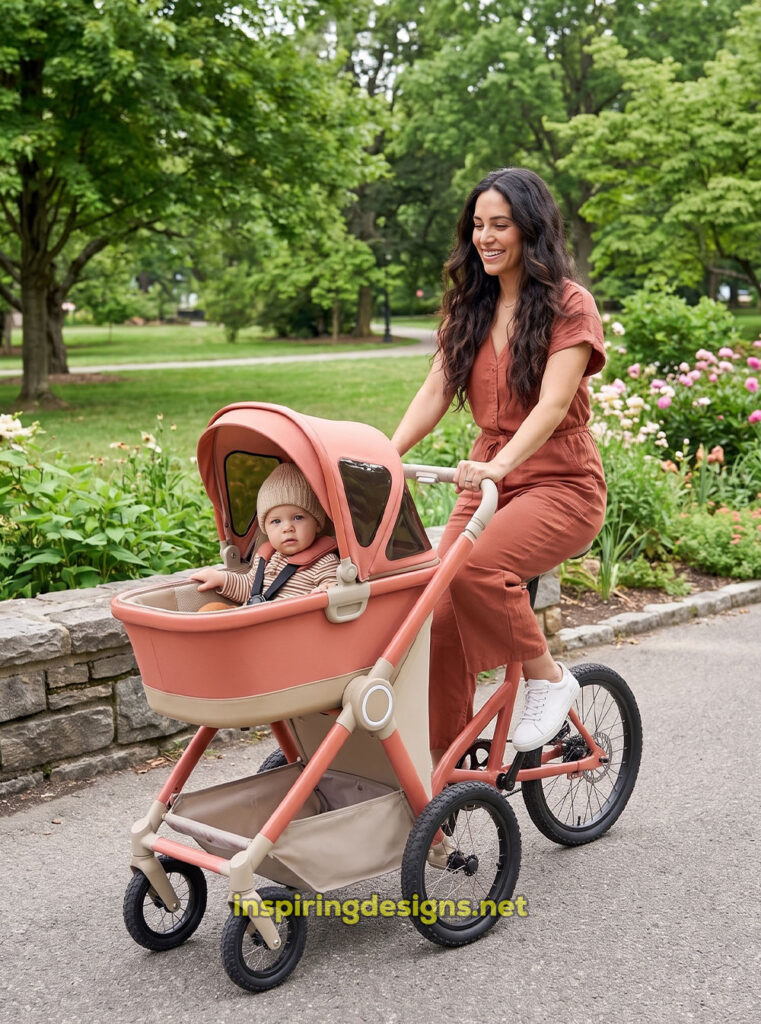
The larger support wheels help the stroller roll across sidewalk seams, driveway transitions, compact gravel, and boardwalk gaps. Pneumatic tires on selected versions soften the ride and provide more traction than narrow hard-plastic stroller wheels.
The rear bicycle wheel uses a chain-and-sprocket drivetrain with a protective guard around the areas closest to the rider’s clothing. Multi-speed gearing provides different resistance levels for starting, cruising, and handling gradual inclines.
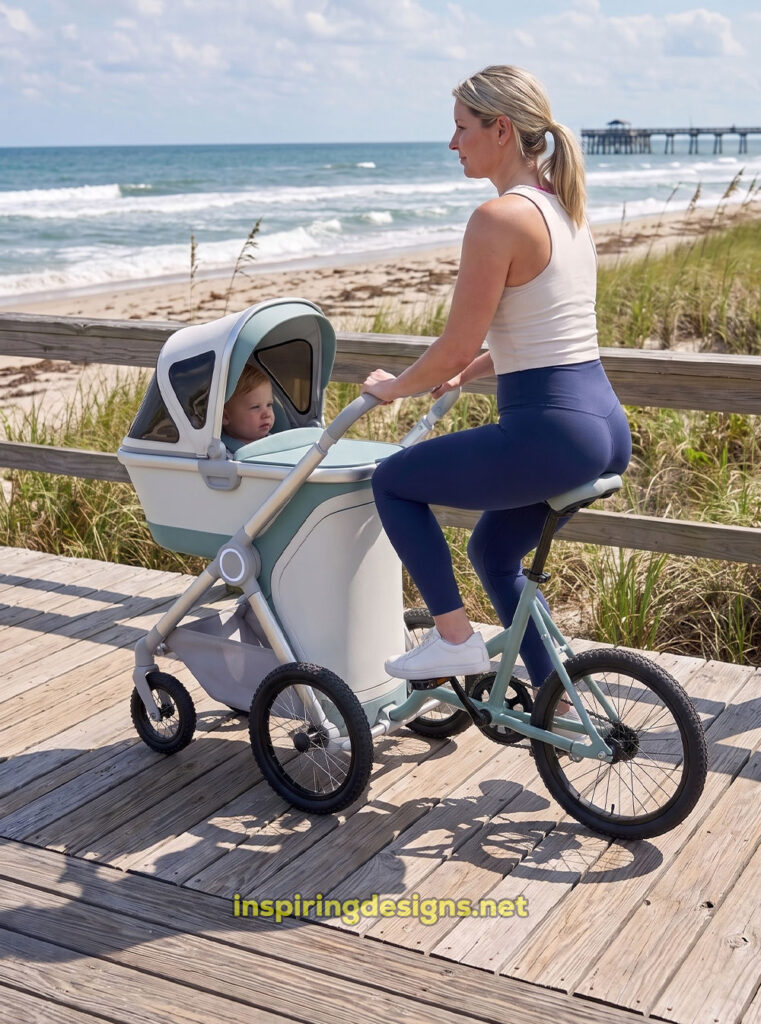
The product is intended for neighborhood streets, paved greenways, promenades, boardwalks, parks, and maintained recreational paths. It is not designed for aggressive road cycling or technical off-road trails. This is family transportation, not the Tour de Snack Time.
Storage for Everyday Family Cargo
A suspended basket beneath the child cabin provides approximately 20 to 30 liters of storage, depending on the model. It can carry blankets, small bags, toys, snacks, changing supplies, and the mysterious collection of objects children insist are absolutely essential.
Some versions also include a flush-mounted rear accessory compartment. When the bicycle assembly is folded, this area can hold compact accessories or maintenance items.
The storage placement keeps the center of gravity low and avoids hanging bulky bags from the push bar. That makes the unit easier to steer and reduces the chance of tipping when the adult releases the handle.
Removable interior fabrics simplify cleanup after spills, crumbs, muddy shoes, and other tiny acts of upholstery rebellion. The exterior body panels use a wipe-clean finish, while textured lower sections help disguise light scuffs from regular use.
Color Options, Cabin Styles, and Wheel Packages
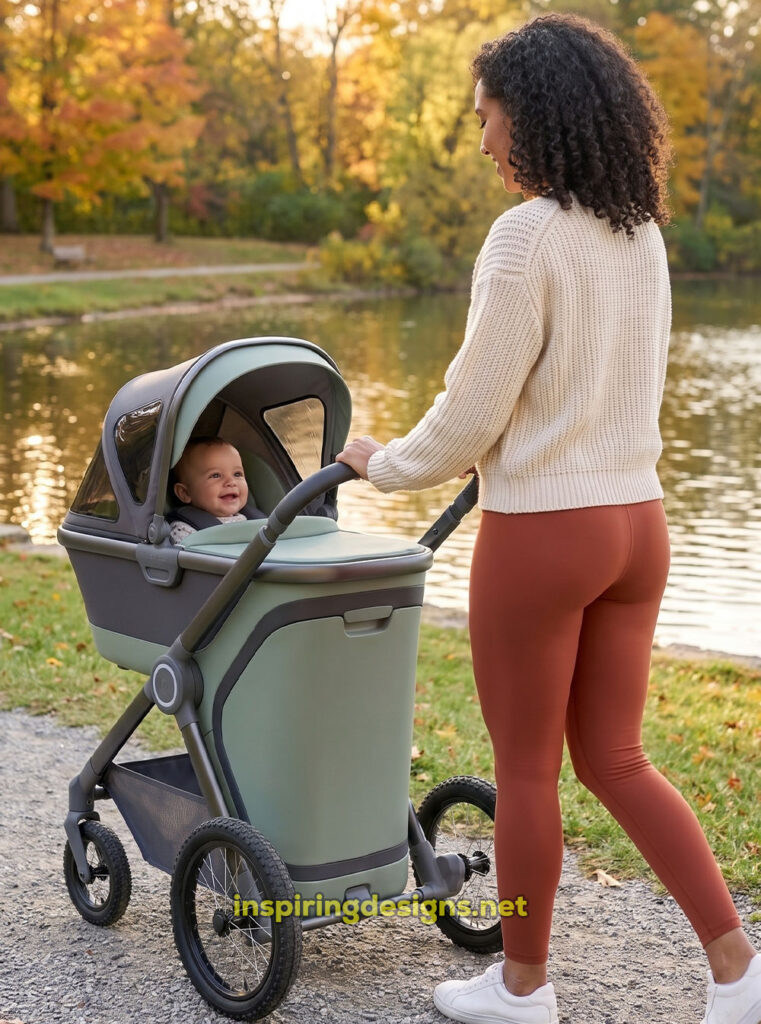
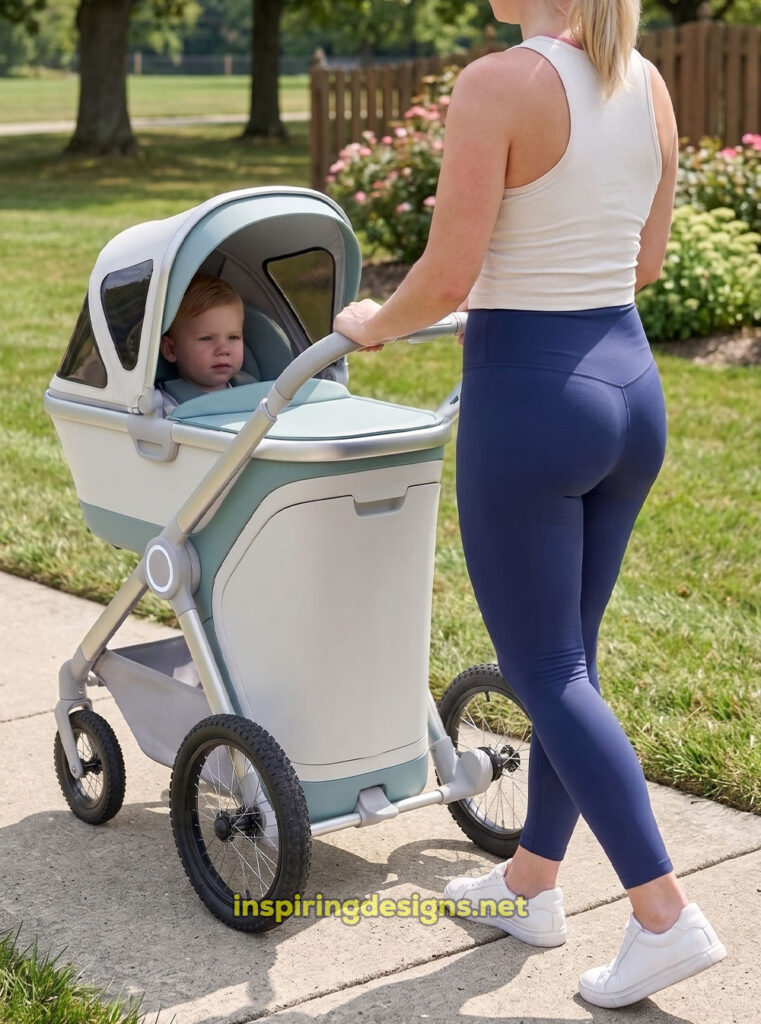
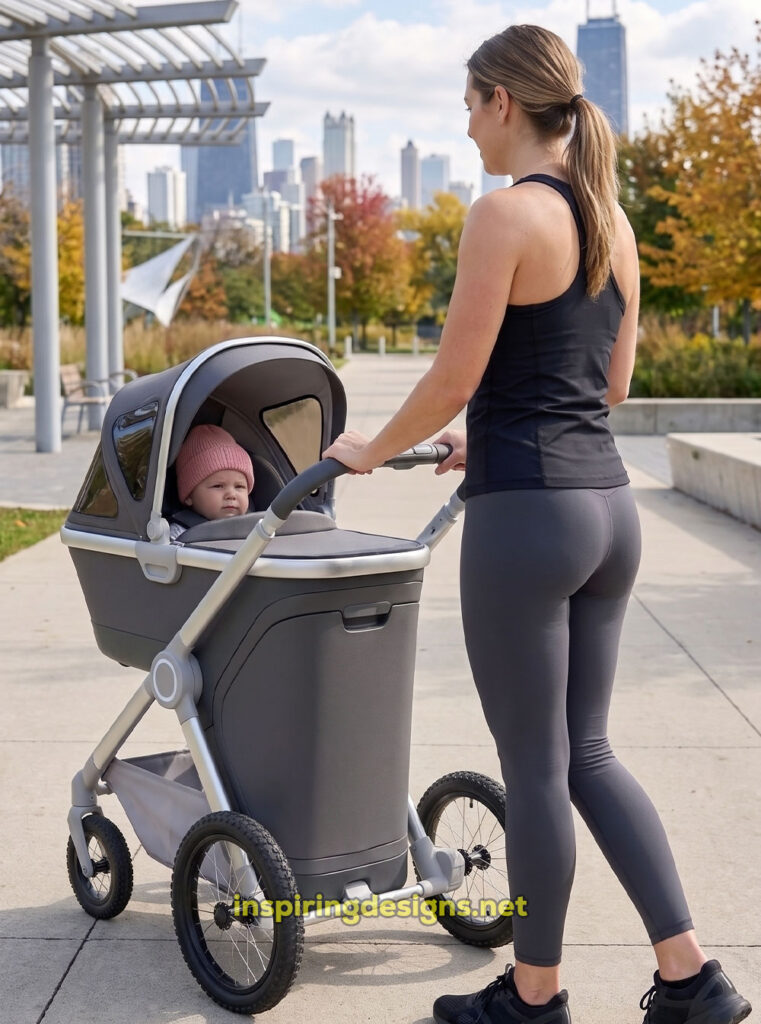
The convertible stroller bicycle is available in numerous coordinated color combinations. Popular options include seafoam and white, navy and silver, sand and cream, sage and charcoal, blush and pearl, sky blue and white, matte black and graphite, burgundy and black, and warm gray with tan accents.
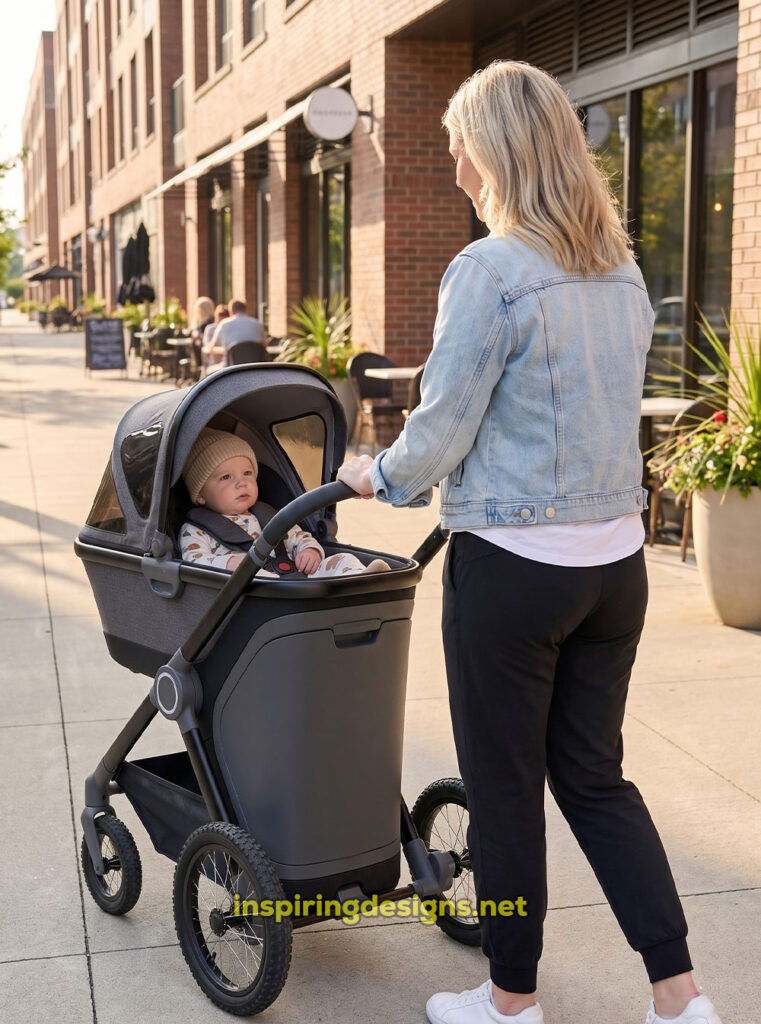
Color blocking can continue across the cabin insert, canopy trim, bicycle frame, saddle, upholstery, and selected wheel details. Families can choose a subtle neutral finish or a brighter high-visibility combination with reflective accents.
The product range also includes different cabin and frame configurations:
- Compact urban models with a shorter body and tighter turning radius
- Standard single-passenger cabins for daily walks and recreational rides
- Extended reclining cabins with additional legroom
- Sport canopy designs with larger ventilation panels
- Fully enclosed weather hoods for cooler or windier conditions
- Urban wheel packages for smooth pavement
- All-terrain tire packages for maintained trails and boardwalks
These options allow the stroller bicycle to fit different lifestyles without changing the basic conversion system. A downtown family can choose a compact frame, while a household near parks or coastal paths can select larger tires and a more protective canopy.
An Integrated Control Panel Keeps Everything in Reach
A compact control panel sits at the center of the push bar. Its position allows the adult to see important operating information without taking both hands away from the controls.
The display shows the active operating mode, frame-lock status, parking-brake position, front caster setting, exterior light controls, travel speed, distance, trip time, and gear selection. Equipped versions also display cabin temperature, maintenance reminders, and pedal-assist settings.
Large tactile buttons make the controls easier to use while wearing gloves or moving over slightly uneven surfaces. Illuminated pivot rings provide additional visual feedback at the main folding joints.
When the frame is being converted, the rings pulse. Once the bicycle frame, saddle support, steering system, and drivetrain are locked, the indicators remain steadily illuminated.
It is a bit like mission control, except the mission is getting to the playground before somebody realizes the favorite stuffed rabbit was left at home.
Safety Features Built Into the Conversion System
The product uses a series of mechanical and electronic interlocks to prevent accidental deployment. The bicycle assembly cannot be released while the wheels are moving, and riding controls remain inactive until the frame is fully secured.
The cross-brace creates a rigid connection between the bicycle subframe and the reinforced cabin cradle. Magnesium-alloy pivot housings, replaceable bearings, and an aluminum main frame distribute weight through multiple support points.
The wide stroller wheel track helps keep the passenger cabin level during stops and low-speed riding. The central rear wheel follows the chassis centerline, while the larger support wheels carry the cabin on either side.
A rear safety lamp and side lighting improve visibility in lower-light conditions. Reflective trim is available on selected color packages for families who regularly use shared paths or neighborhood streets.
As with any child carrier, the adult should secure the harness, confirm all locks, check tire pressure, test the brakes, and follow the model’s passenger weight and age limits before each outing. Safety checks may not be glamorous, but neither is explaining why a loose tire decided to begin its own independent journey.
Who Is the Convertible Stroller Bicycle For?
This design is especially useful for active parents and caregivers who regularly combine walking with longer neighborhood trips. It works well for families living near greenways, coastal boardwalks, large parks, planned communities, and paved campground routes.
It also suits households trying to reduce short car journeys. The stroller mode handles pedestrian areas and errands, while the bicycle mode makes longer paved routes faster and less tiring.
Design-conscious families will appreciate the smooth molded body panels, hidden fasteners, recessed cables, coordinated upholstery, and integrated conversion mechanism. The finished product looks more like a modern mobility capsule than a traditional fabric stroller with a bicycle bolted onto the back.
Storage is most practical in a garage, mudroom, covered porch area, apartment mobility room, or larger vehicle cargo space. Folding components reduce the overall length and height, while removable wheels make selected models easier to transport.
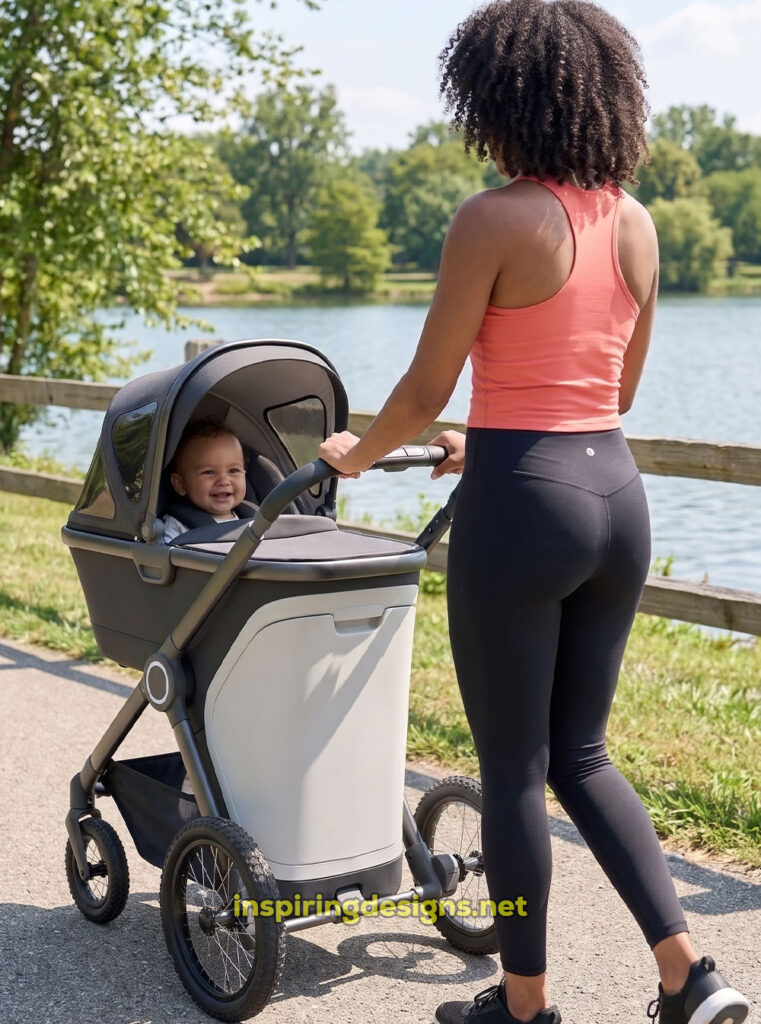
One Family Carrier, Two Ways to Explore
The convertible stroller bicycle brings walking and cycling together in one carefully integrated design. Its front passenger cabin stays in place as the rear bicycle frame unfolds, allowing the family to switch travel modes without changing seats or attaching a separate trailer.
The enclosed cabin provides comfort, weather protection, ventilation, and a secure five-point harness. The adult receives an adjustable saddle, wide steering bar, hand brakes, multiple gears, integrated storage, and an upright riding position.
With compact, standard, and extended sizes available, along with numerous wheel, canopy, color, and upholstery options, the convertible stroller bicycle can be matched to a wide range of families and environments.
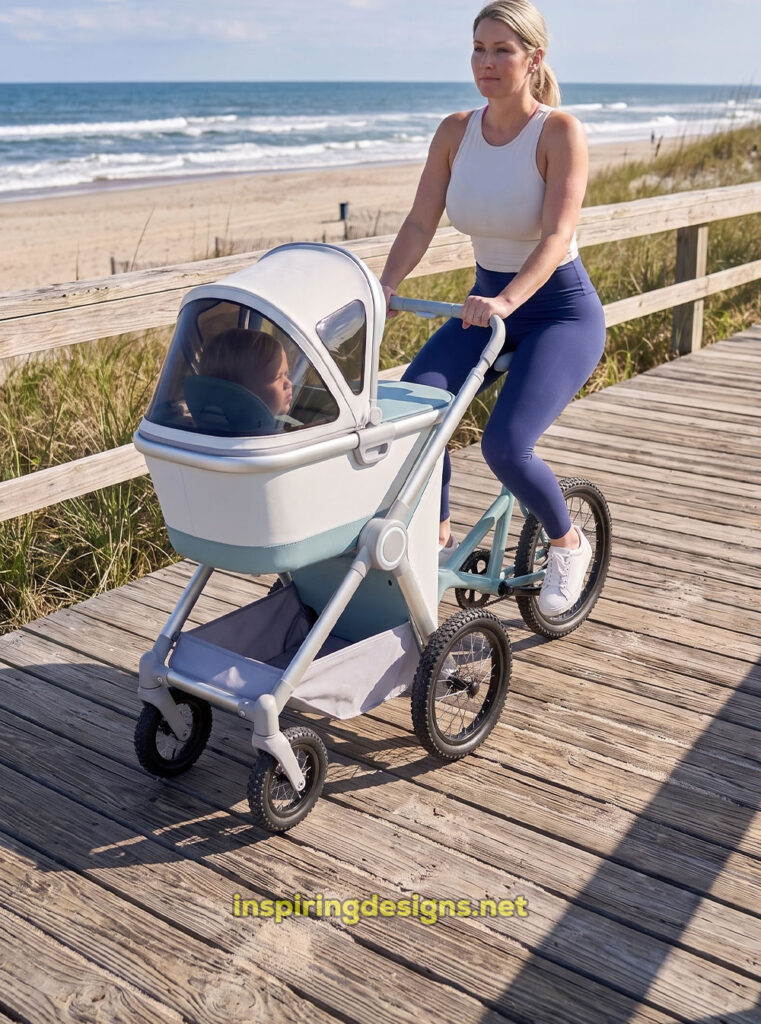
It is practical enough for everyday walks, clever enough for longer rides, and unusual enough to start conversations wherever it goes. Most importantly, it gives parents one less piece of equipment to store, transport, and trip over in the garage.
That is not just smart mobility. That is a wheel-y good parenting upgrade.
| Pros | Cons |
|---|---|
| Converts from a push stroller into a pedal-powered bicycle carrier | Heavier than a conventional stroller due to the added frame and drivetrain |
| Keeps the child in the same front-mounted cabin during conversion | Requires more storage space than a compact everyday stroller |
| Enclosed cabin provides added protection from wind, glare, and light weather | Larger dimensions may make narrow doorways and crowded shops harder to navigate |
| Adjustable saddle, handlebar, and cabin options suit different users | Conversion must be completed while stationary and with the parking brake engaged |
| Large wheels improve comfort over sidewalk seams, boardwalks, and maintained paths | Not designed for high-speed cycling or technical off-road terrain |
| Integrated brakes, frame locks, and visual indicators support safer operation | More moving parts mean additional maintenance compared with a basic stroller |
| Under-cabin storage carries everyday family supplies | Storage capacity may be reduced when certain bicycle components are folded away |
| Multiple sizes, colors, canopies, and wheel packages offer plenty of choice | Premium materials and complex engineering are likely to increase the purchase price |
| Reduces the need to own both a stroller and a separate child-carrying bicycle setup | Its weight can make lifting it into a vehicle more difficult |
| Makes longer family outings faster while still working for ordinary walks | Parents need time to learn the conversion, braking, and steering systems |