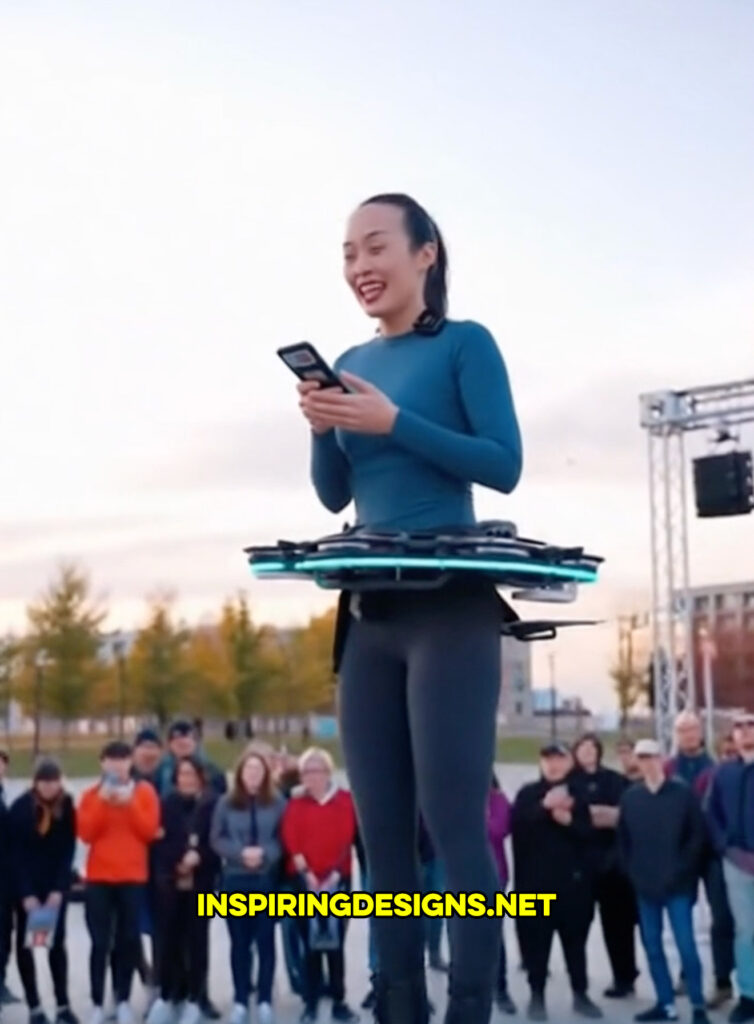
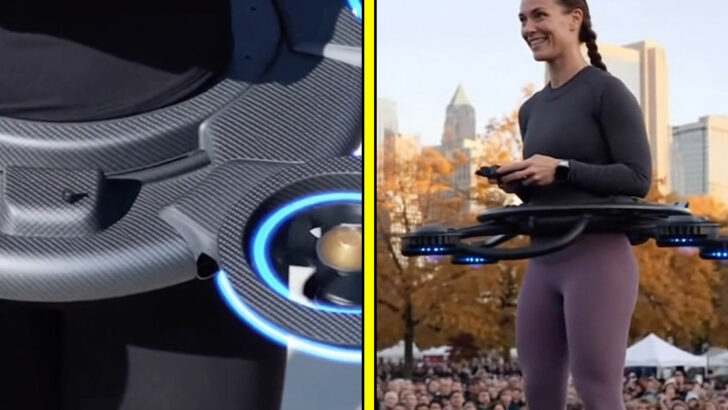
If you have ever wished you could quietly float above a crowd, glide along a beach at sunset, or snag a jaw-dropping shot for your next video, waist-mounted drones are the concept to watch. Also called waist drones, body drones, and human quadcopters, these wearable flyers wrap around your hips and provide controlled lift with multiple enclosed rotors. The result is a low-altitude hover that feels like stepping onto a personal magic carpet.
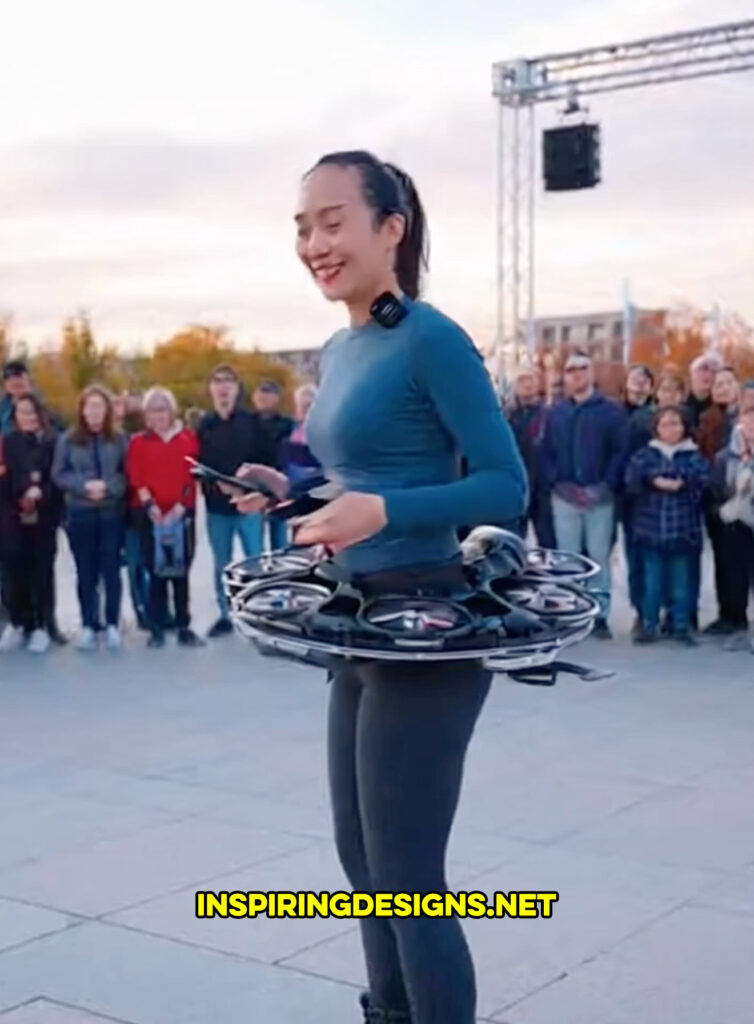
Below is a practical, search-friendly guide to how they work, what to expect from the tech, where they shine, and the key questions curious buyers and creators should ask.
What Is a Waist-Mounted Drone
A waist-mounted drone is a circular flight ring that fastens securely at your waist and uses four to six electric ducted fans to create lift. Onboard sensors keep you balanced while a handheld controller or phone app handles throttle and direction. Think of it as a compact human quadcopter that lets you hover a few feet off the ground in open spaces.
Most designs focus on three things: stability, safety, and simplicity. The goal is a short, thrilling flight experience that feels intuitive for non-pilots.
How Waist Drones Work
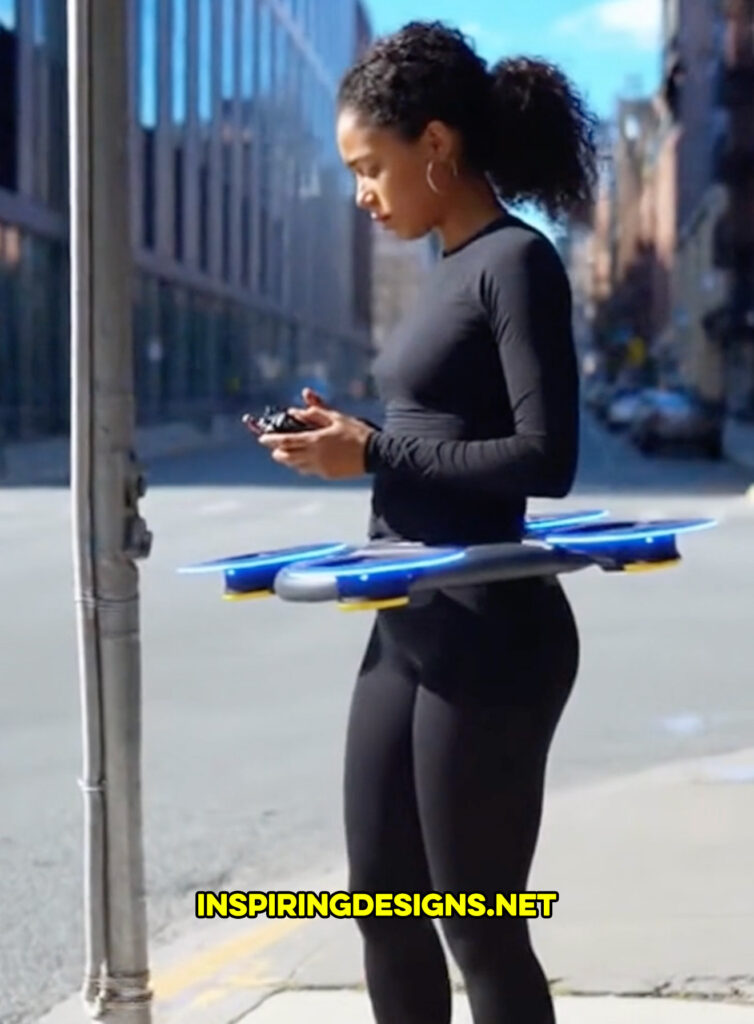
At a high level, the tech stack includes:
- Lift system with multiple brushless motors inside protective ducts for efficiency and safety.
- Flight computer that blends IMU, gyroscope, and barometer data to keep altitude and orientation steady.
- Battery module placed at the rear of the ring to balance weight and allow quick swaps.
- Control options ranging from a compact joystick to a smartphone app with altitude hold and beginner modes.
- LED visibility so bystanders can see the craft, especially at dusk.
Lean slightly to move. Straighten to stop. Land by reducing thrust and letting the controller’s auto-stabilize logic do the heavy lifting.
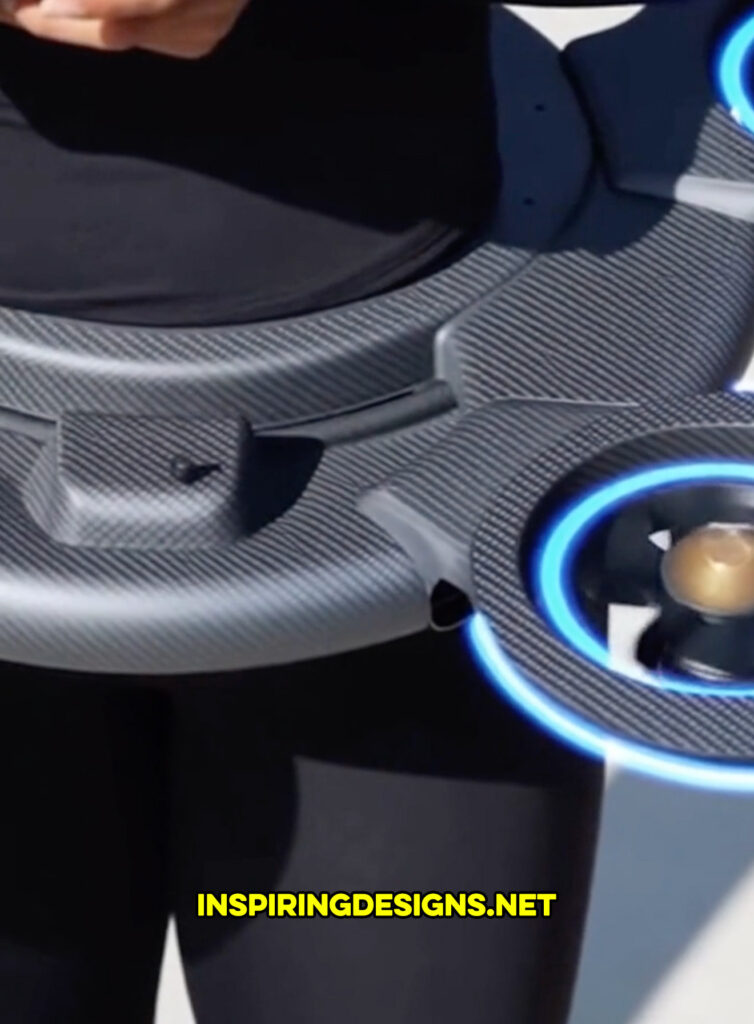
Core Specs You’ll See
| Feature | Typical Range Today |
|---|---|
| Rotor count | 4 to 6 ducted fans |
| Hover height | About 2 to 15 feet in calm conditions |
| Flight time | Around 15 to 20 minutes per battery |
| Horizontal range | Up to roughly 1 mile per charge in open areas |
| Materials | Carbon fiber composites and reinforced polymers |
| Unit weight | Roughly 18 to 24 pounds, depending on build |
| Noise profile | Quieter than open-prop drones thanks to ducts |
Numbers vary by prototype and environment, but these ranges help set realistic expectations.
Where Waist-Mounted Drones Shine
- Content creation
Hovering rings unlock angles you cannot get with a selfie stick or action cam on a pole. Imagine a steady mid-air reveal shot or a slow orbit during golden hour. - Live demos and tech events
Nothing draws a crowd faster than a person calmly levitating in a glowing ring. For exhibitions and brand activations, the spectacle factor is off the charts. - Recreation
In parks, beaches, or large indoor arenas, a short hover session is pure delight and a welcome change from scooters or skates. - Training for eVTOL culture
As personal aviation evolves, waist drones are an approachable stepping stone that teaches basic aerial awareness and safety habits.
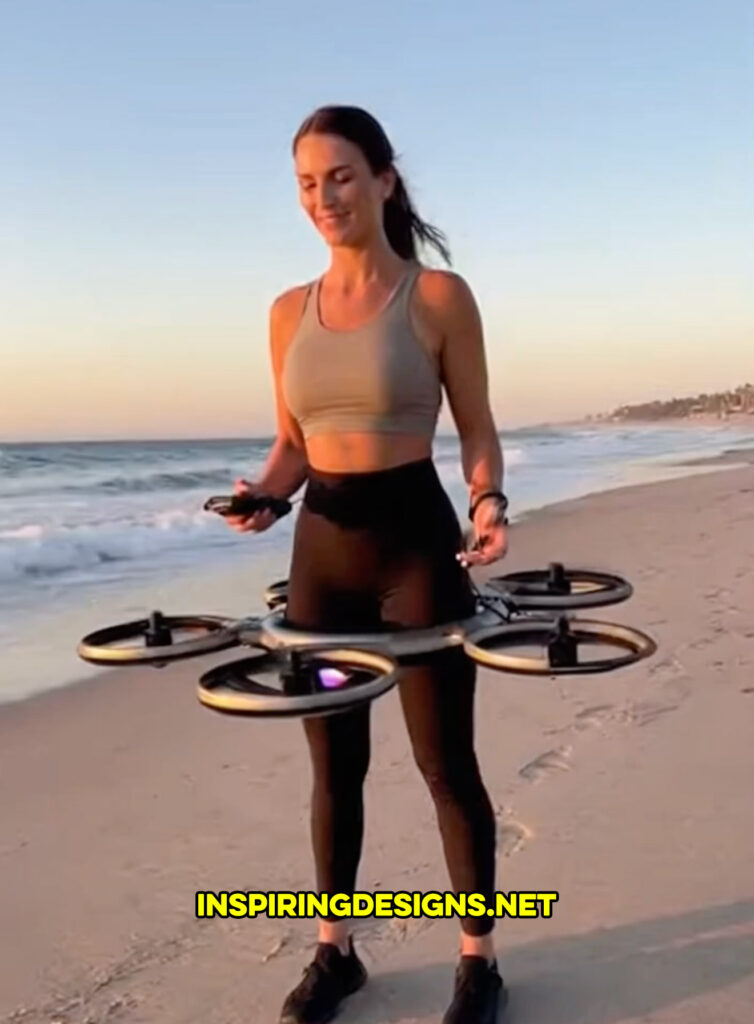
Safety Features That Matter
Personal flight should prioritize protection. Look for:
- Fully shrouded fans to prevent contact with spinning blades and improve efficiency.
- Redundant sensors so the craft can correct minor issues in milliseconds.
- Controlled descent logic that reduces altitude smoothly if battery dips or a fault is detected.
- Auto-level and altitude hold for steady hovering during takeoff and landing.
- Bright LEDs to increase visibility and communicate status with color codes.
Responsible operation still matters. Stick to open spaces, avoid crowds, and follow local regulations for low-altitude devices.
Sound and Comfort
Ducted fans help dampen noise, and carbon fiber frames keep weight manageable. Properly fitted, the ring should feel like a sleek backpack worn around your hips. Padded straps, wide buckles, and curved contact points reduce pressure so you can focus on the scenery rather than the gear.
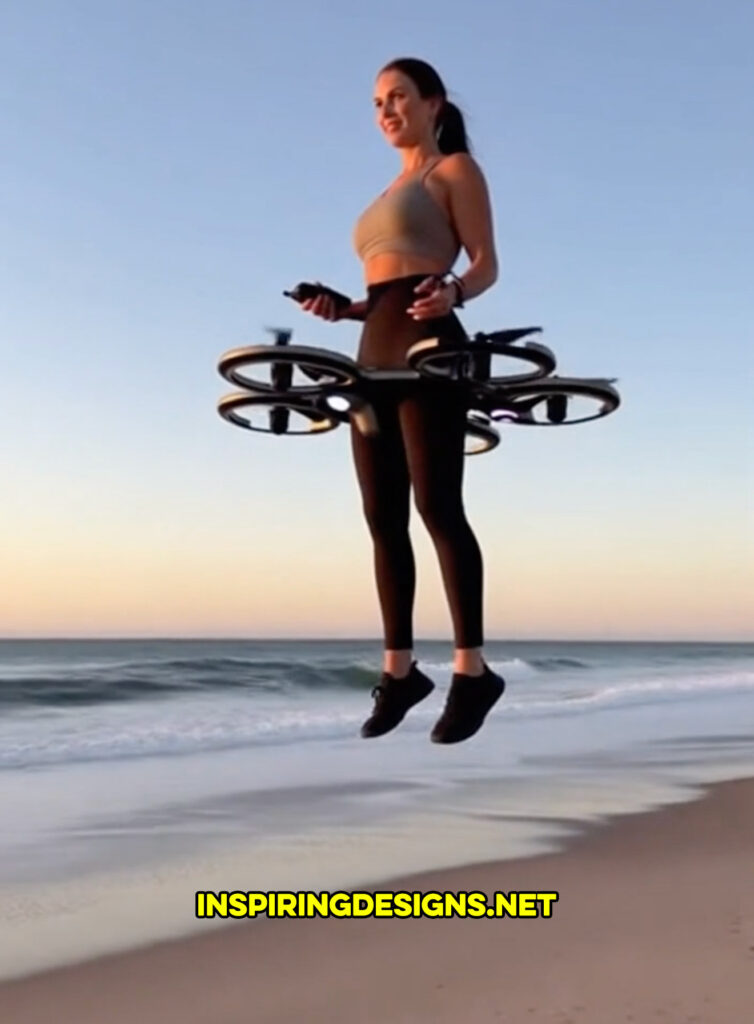
Battery Life and Power Management
Expect 15 to 20 minutes per battery in average conditions. Flight time is affected by wind, payload, and how aggressively you fly. Smart power systems show live telemetry for remaining charge and estimated time to land. Swappable packs are essential for creators who need multiple takes.
Tips to maximize airtime
- Fly in calm weather.
- Avoid rapid climbs and hard braking.
- Keep accessories lightweight.
- Use fresh, balanced battery packs and store them properly.
Who Waist Drones Are Best For
- Filmmakers and vloggers who want dynamic, human-centric shots.
- Event producers seeking futuristic crowd-pleasers.
- Drone enthusiasts interested in the next frontier of wearable flight.
- Futurists and early adopters who love to test novel mobility tech.
If you need long-distance commuting, this is not your vehicle. It excels at short, safe, captivating flights where the experience is the point.
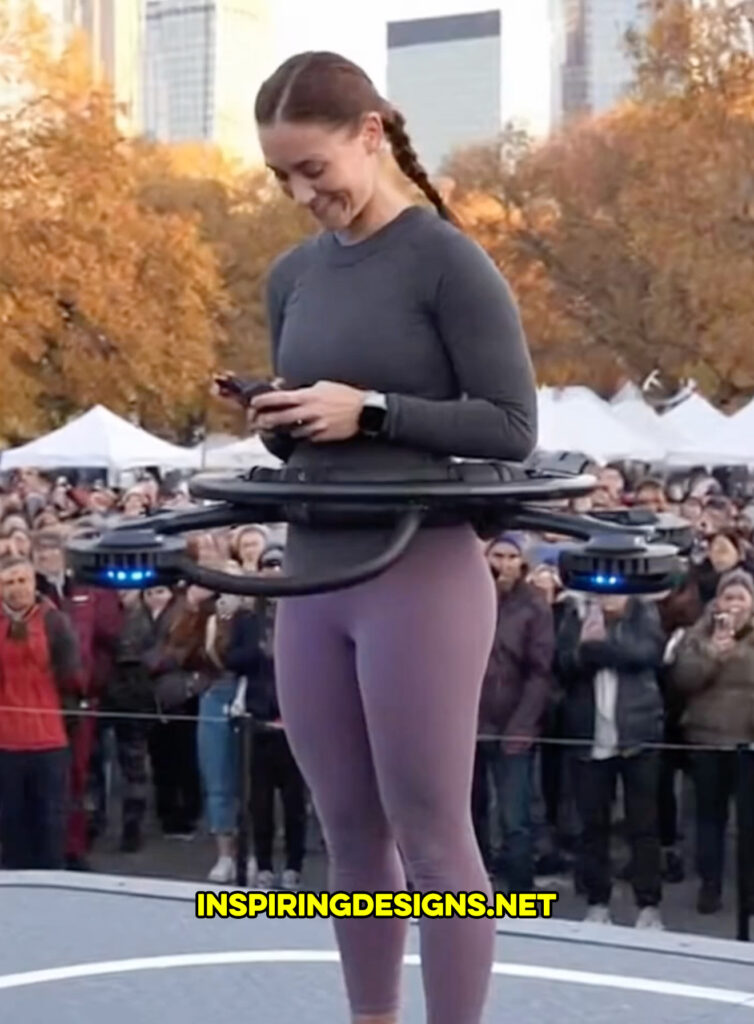
Use Cases That Actually Work
- Beach sunrise hovering to capture rolling waves with you in frame.
- Rooftop demos in controlled spaces with spotters and safety boundaries.
- Plaza fly-ins during tech festivals with marshaled viewing areas.
- Creative B-roll for travel, fitness, or fashion videos when you need a floating camera platform that stays with the subject.
Buying and Spec-Sheet Checklist
If you are researching models, compare:
- Rotor design
Look for high-thrust ducted fans, reliable ESCs, and weather-sealed housings. - Stabilization suite
Check the sensor list and whether the craft offers altitude hold, auto-level, and return-to-land behaviors. - Controller options
Handheld joystick latency, app interface clarity, and whether there is a beginner mode. - Build and finish
Carbon fiber or reinforced polymer, removable arms, and travel-friendly protection. - Battery ecosystem
Rated capacity, charge time, cycle life, and availability of spares. - Lighting
Customizable LED rings for visibility and fun factor, plus status codes for battery and warnings. - Support and training
Access to tutorials, safety checklists, firmware updates, and regional compliance guidance.
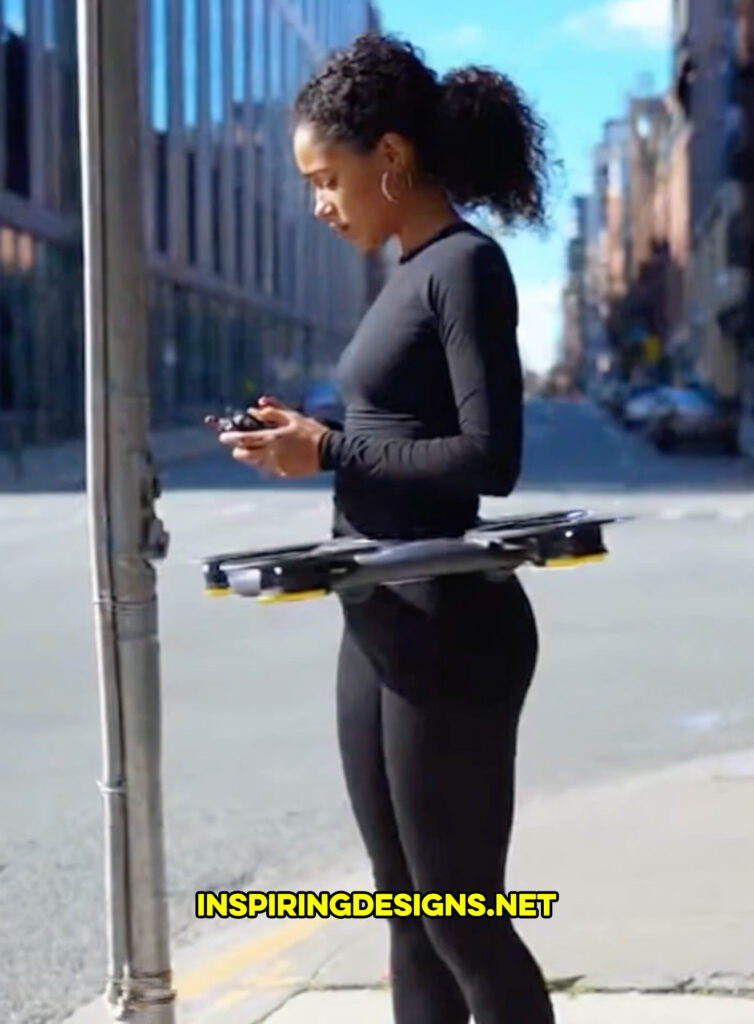
Style and Customization
Part of the charm is how futuristic these look. Many builds offer:
- Matte or carbon weave finishes that resist scuffs.
- Color-tunable LEDs to match events, outfits, or team branding.
- Modular arms for easier storage and transport.
- Accessory mounts for action cams and micro gimbals.
Smart Features You May See
- Pre-set hover heights so you can focus on filming.
- Follow-me framing for simple tracking shots around a set perimeter.
- Geo-alerts and soft geofences to help keep flights inside safe zones.
- App dashboards that show battery health, motor temps, and firmware status.
- AR overlays through glasses or phone screens that visualize virtual flight paths.

Operating Considerations and Regulations
Rules differ by region, and waist-mounted drones live in a new niche. The safest approach is to treat them like low-altitude specialty devices:
- Stay low and local in spacious areas with clear lines of sight.
- Use spotters during public demos and create buffer zones.
- Monitor weather since wind and gusts shorten flight time and complicate control.
- Respect privacy and avoid flying over people or traffic.
- Check insurance for events, shoots, or commercial work.
Maintenance Basics
Reliable flight comes from simple habits:
- Inspect ducts, blades, and fasteners before each session.
- Keep batteries within manufacturer charge ranges and store at proper temps.
- Update firmware and recalibrate sensors after transport.
- Wipe down the frame to remove salt, sand, or dust after beach or park flights.
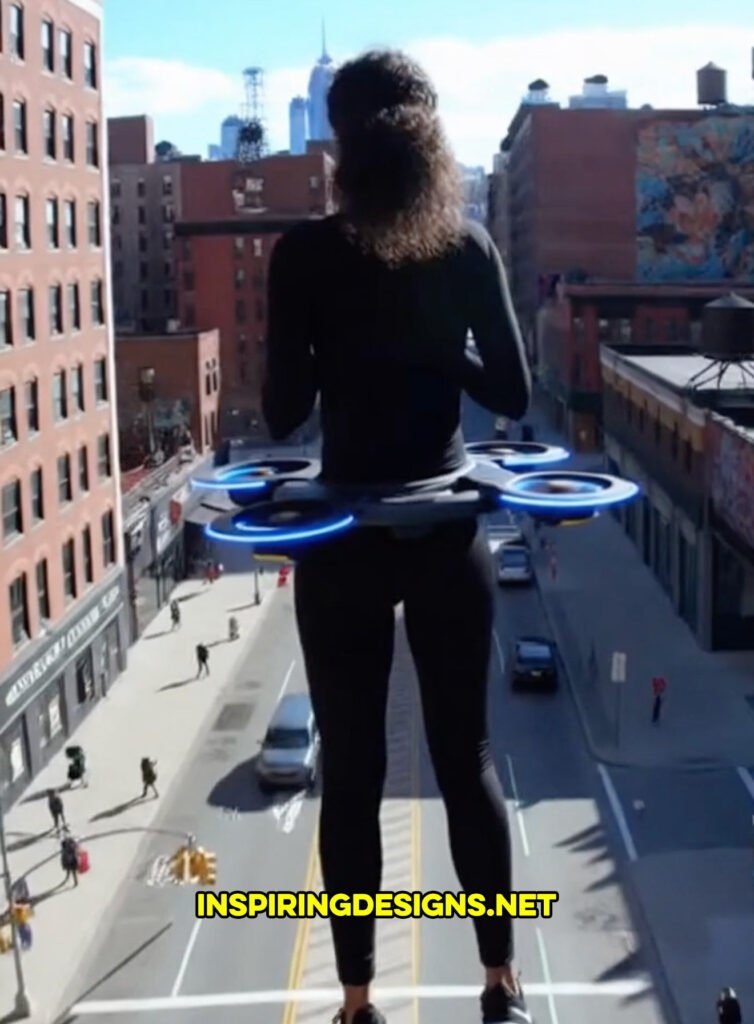
Frequently Asked Questions
How high can a waist-mounted drone fly
Most designs are tuned for low-altitude hovering, commonly a few feet up to around 15 feet in calm air. That keeps the experience safe, social, and perfect for filming.
How loud are they
Ducted fans are noticeably quieter than open props of similar size. You will hear a steady whoosh rather than the sharp whine of hobby quads.
Can they carry a camera
Yes, many have mounts for action cameras or compact gimbals. Keep accessories light to preserve flight time.
How hard are they to learn
With altitude hold and auto-level, most people can hover within minutes. Advanced moves still benefit from practice and a spotter.
Are they waterproof
Typically not. Light mist may be fine, but water and electronics are not friends. Fly dry and clean the unit after sandy or salty environments.
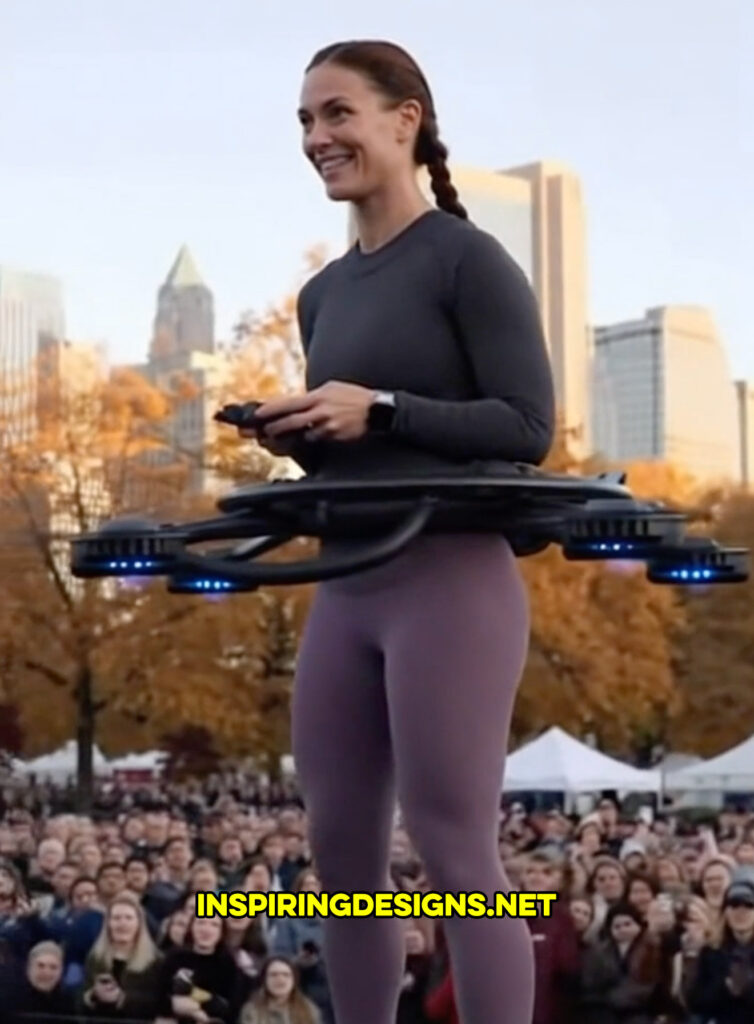
The Bottom Line
Waist-mounted drones turn the dream of personal hovering into a playful reality. They are not daily commuters, and they will not replace your camera drone for long aerial missions. What they deliver is a memorable, cinematic way to move through air for a few minutes at a time. For creators, event teams, and early adopters, that is more than enough to justify a spot on the gear list.
As battery tech improves and control software matures, expect longer sessions, smarter safety nets, and even sleeker designs. Until then, the current generation already unlocks something rare in tech: a pure, giddy sense of flight that you can wear.
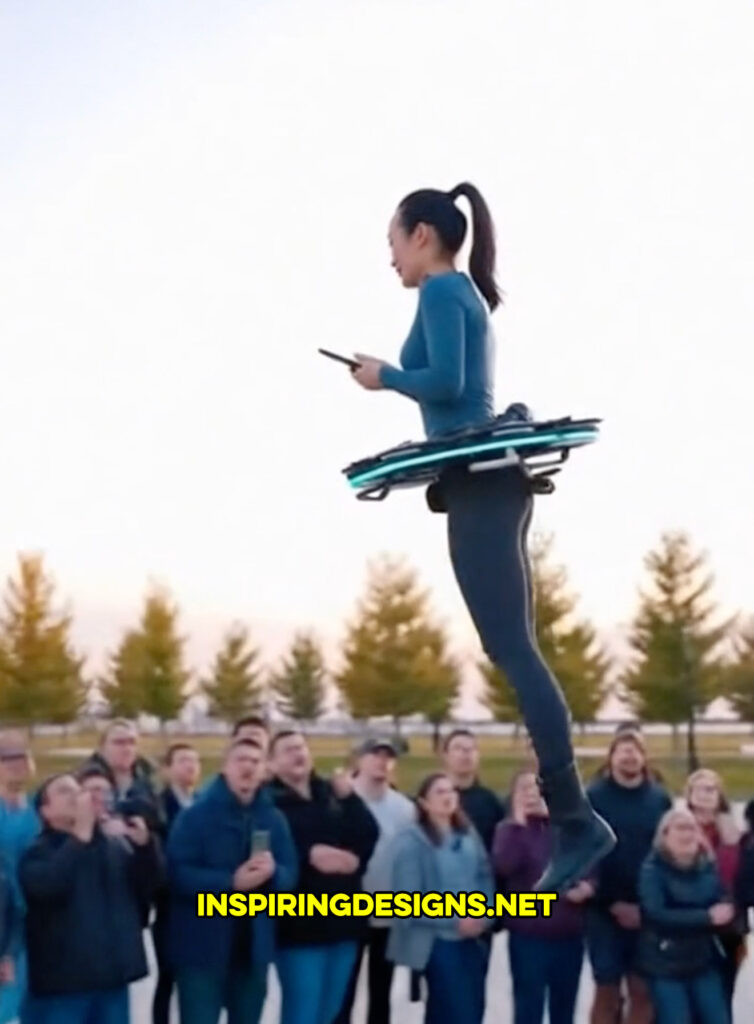
Lets check out some pros vs cons to see if you want to become a human quadcopter!
| Pros | Cons |
|---|---|
| Intuitive hover with auto-level | Short flight time per battery |
| Enclosed ducted fans increase safety | Requires wide open spaces |
| Compact wearable form factor | Limited altitude and speed |
| Huge visual impact for events | Not suitable for transport or cargo |
| Simple controls via remote or app | Wind sensitivity reduces stability |
| Swappable batteries for longer sessions | Batteries and spares add cost and weight |
| Great for creative filming angles | Regulatory gray areas in some regions |
| Customizable LEDs for visibility | Not weatherproof; avoid rain and salt spray |
| Quiet compared to open-prop drones | Needs regular inspection and maintenance |
| Carbon fiber build keeps weight low | Learning curve for smooth landings and crowd safety |