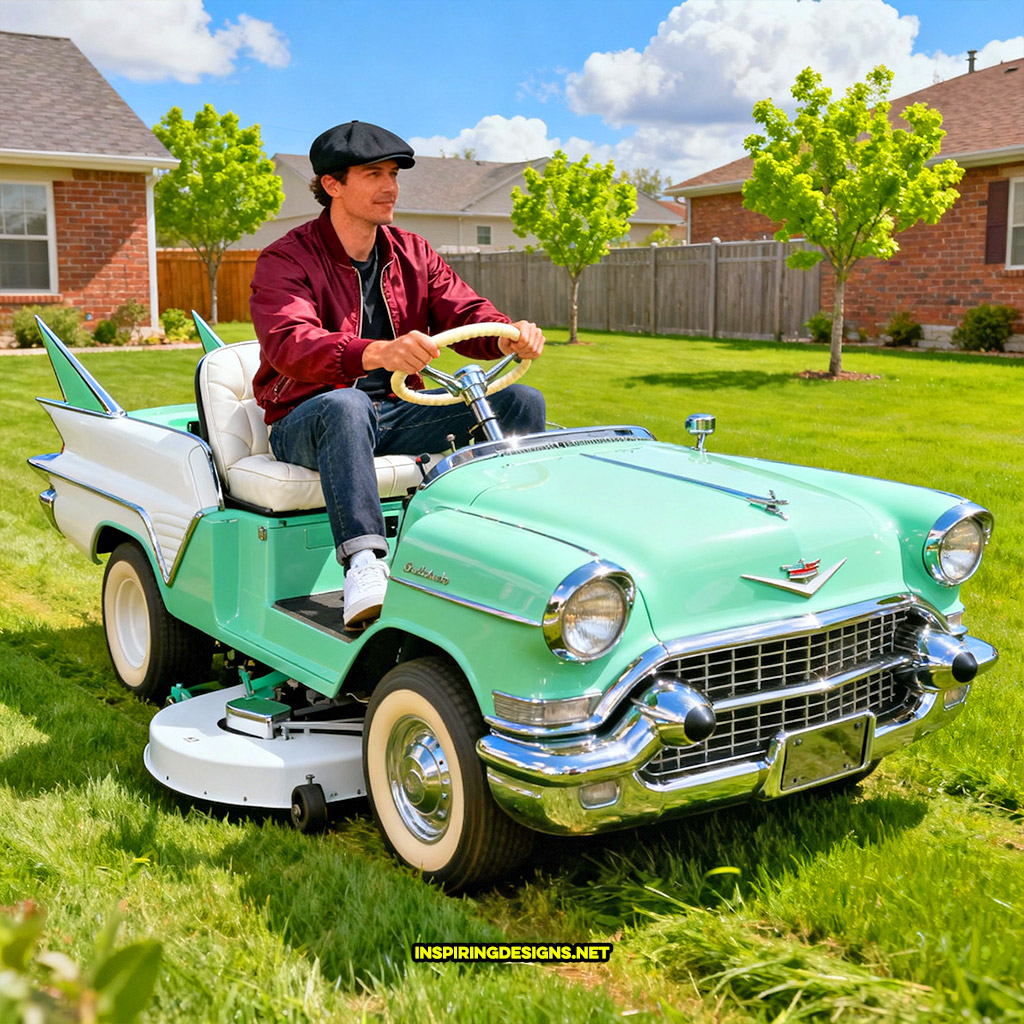
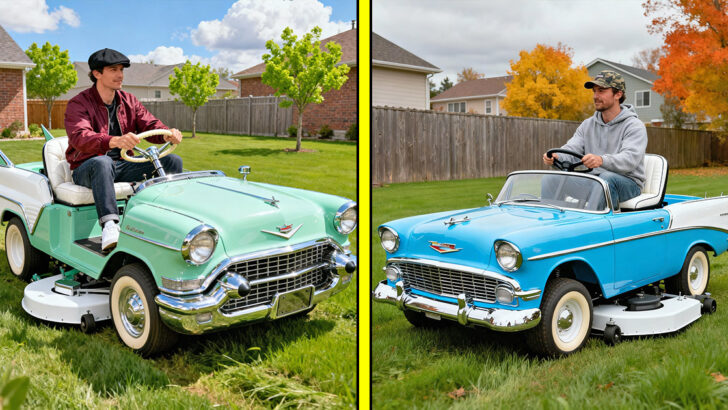
If mowing your lawn feels like a chore, you have not met classic car riding mowers yet. Picture yourself gliding across the yard in a seafoam cruiser with gleaming chrome and real working headlights while the deck underneath quietly trims every blade. These machines turn yard work into a mini parade. Better yet, they deliver real performance beneath the nostalgic bodywork.
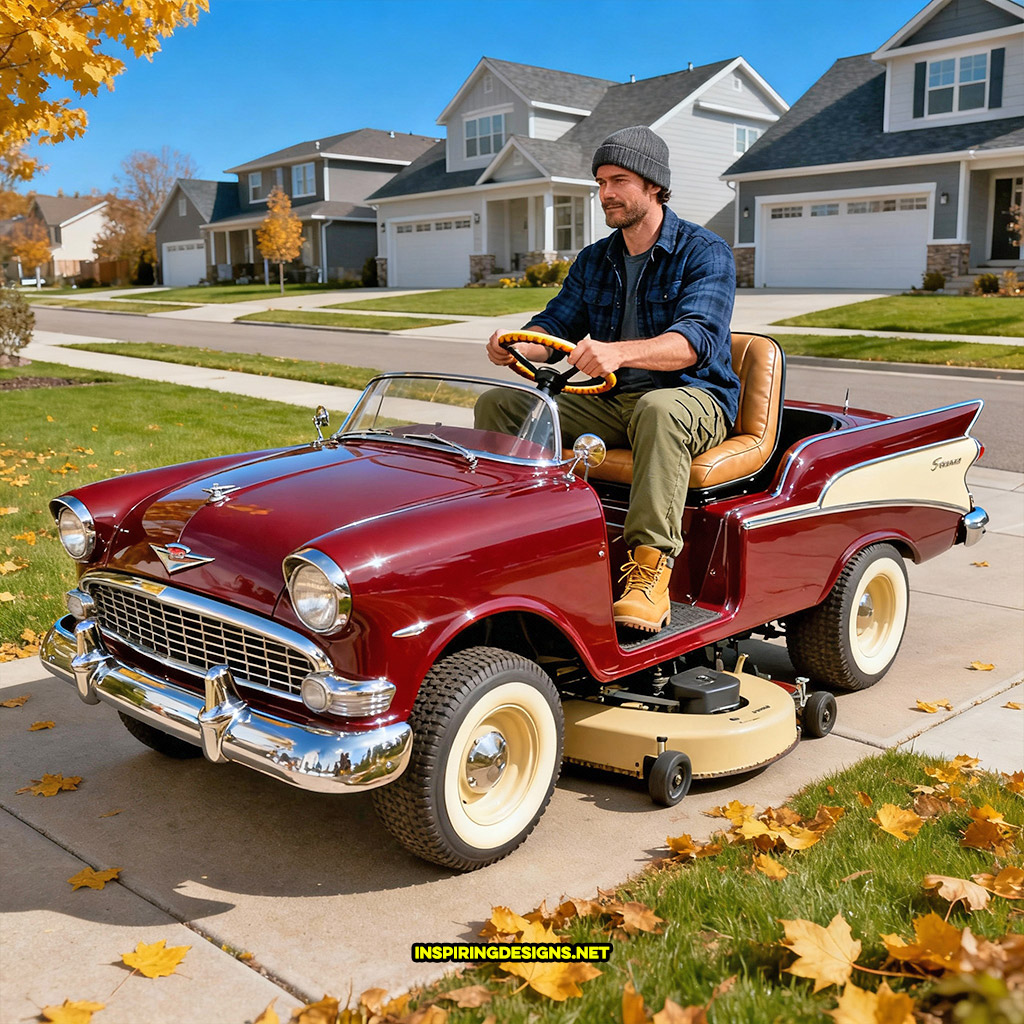
Below is a complete guide to classic car riding mowers, including features to expect, how they compare with classic car zero turn mowers, who they are best for, what to budget, and how to keep them humming for years.
What Is a Classic Car Riding Mower
A classic car riding mower is a fully functional riding lawn mower wrapped in a body styled after beloved American cars from the 1940s through the 1960s. The shell is typically molded fiberglass finished in high-gloss automotive paint, then trimmed with metal brightwork, whitewall-style turf tires, and a chrome steering wheel. Under the skin lives a modern mower chassis with a dependable engine, hydrostatic transmission, and a rotary cutting deck.
Enthusiasts call them collector car riding mowers for a reason. They behave like real lawn equipment, yet give you garage art you can actually drive.
Why People Love Them
- Nostalgia that works: Tailfins, toothy grilles, and two-tone paint deliver car-show charisma while the deck cuts cleanly.
- Conversation magnets: Drive one and expect neighbors, delivery drivers, and passing joggers to smile and wave.
- Surprising capability: Most models offer 30 to 42 inch decks, stable handling, and smooth hydrostatic drive.
- Night mowing: LED headlights are not just props. They help you finish the back corner before dusk.
- Customization: Pick colors, trim, and sometimes body style to match your favorite era.
Key Specs You’ll Commonly See
- Engines: Gasoline, usually 15 to 22 HP
- Transmissions: Hydrostatic foot-control for riders, dual lever control on zero turns
- Deck widths: About 30 to 42 inches with multiple height settings, often 1.5 to 4 inches
- Frames: Modified mower chassis with reinforced mounts for the body shell
- Lighting: Real LED headlamps, sometimes tail lamps
- Tires: Turf-safe with whitewall styling for the vintage look
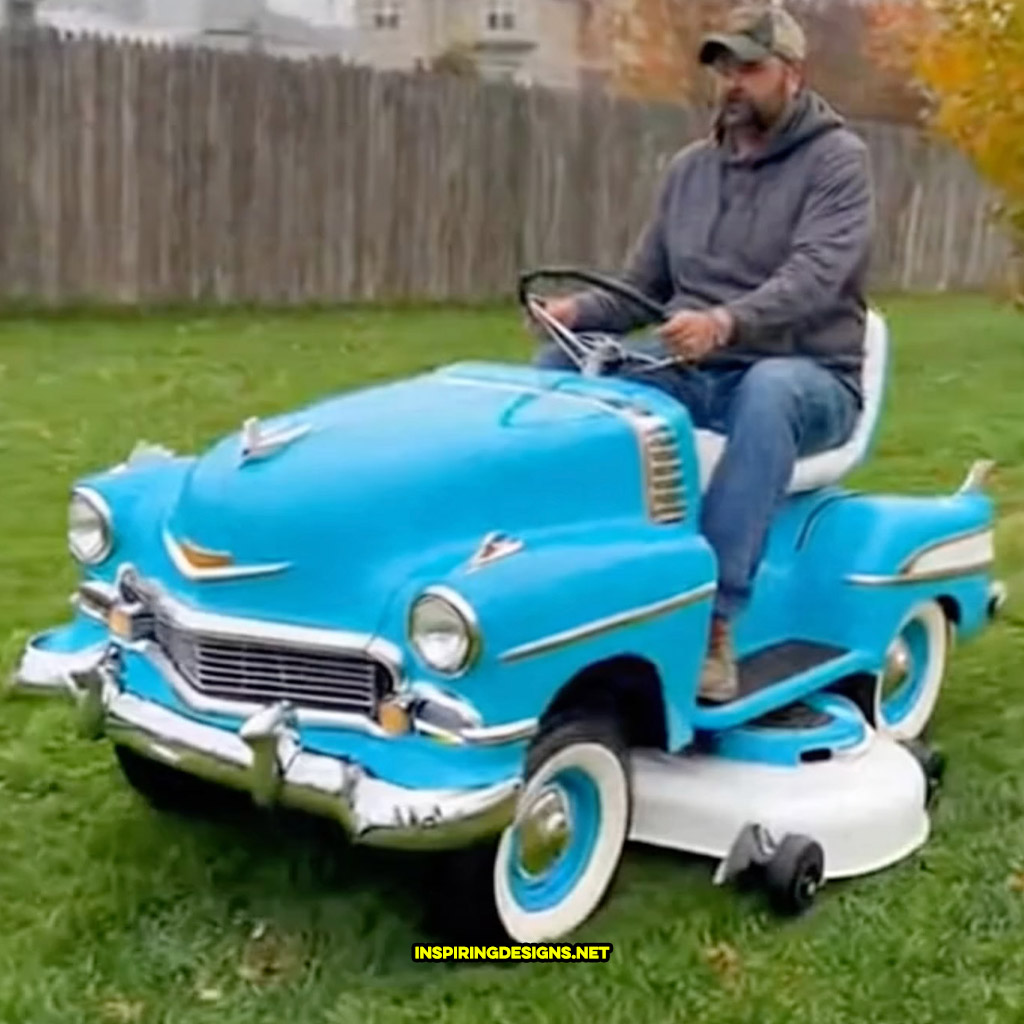
Classic Car Riding Mowers vs Classic Car Zero Turn Mowers
If your lawn is simple and mostly open, a standard rider is perfect. If you dance around trees and flowerbeds, check the zero turn versions. Here is a quick side-by-side.
| Feature | Classic Car Riding Mowers | Classic Car Zero Turn Mowers |
|---|---|---|
| Typical deck size | 30 to 42 in | 32 to 42 in |
| Turning radius | Tight, but not zero | True zero turn for precision |
| Controls | Steering wheel and foot pedal | Dual lap bars |
| Best for | Medium lawns with open runs | Yards with many obstacles and curves |
| Learning curve | Very friendly | Moderate if you are new to ZTRs |
| Vibe | Convertible cruiser | Low-slung speedboat look |
Both categories mow beautifully. The choice comes down to your yard layout and whether you want a steering wheel or lap bars in front of that shiny chrome grille.
Authentic Design Details
Classic car riding mowers are fun because builders sweat the small stuff. Expect:
- Metal chrome accents on bumpers, grilles, hood ornaments, and trim strips
- Padded vinyl bench seating with horizontal stitching for the midcentury look
- Faux gauge cluster with functional switches for ignition, lights, and blade engagement
- Whitewall-style rims paired with turf-friendly tires
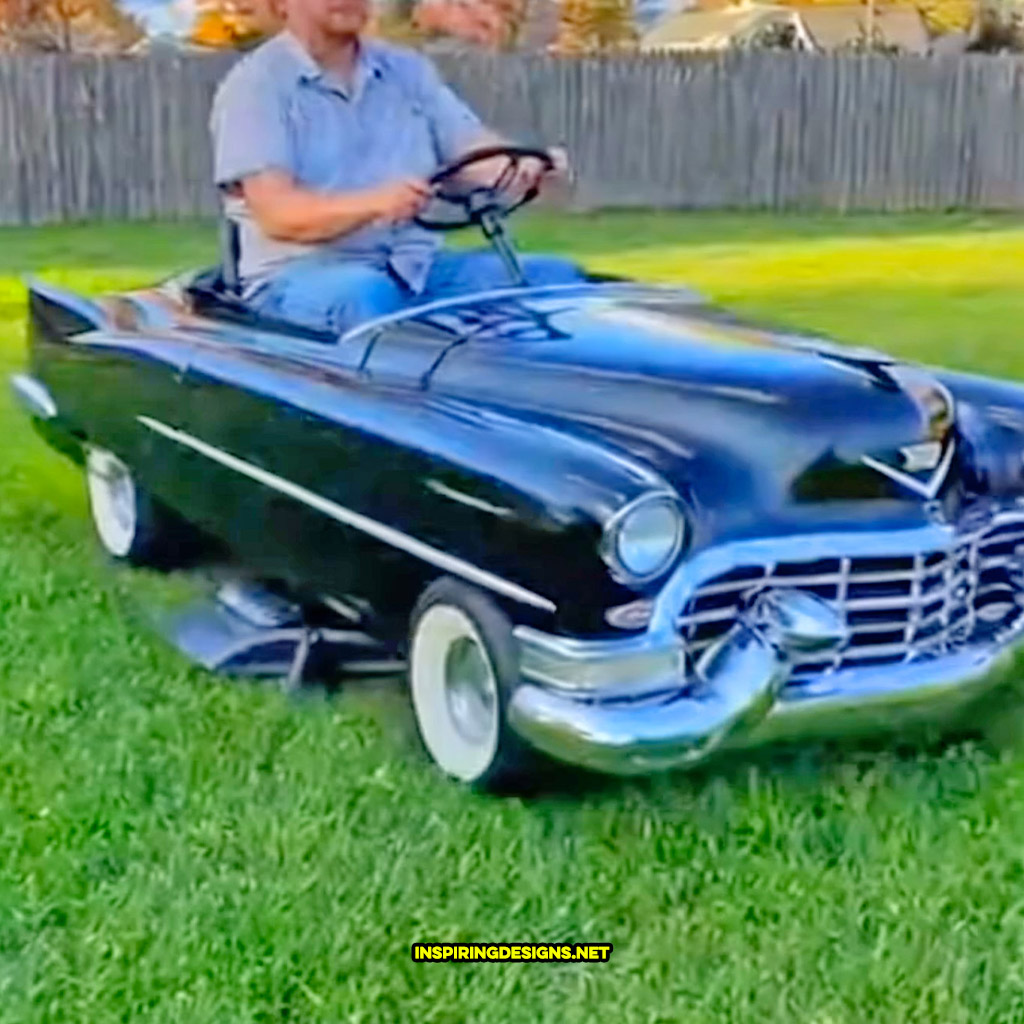
- Two-tone paint schemes like cherry red with white coves, seafoam green with cream, powder blue with white, jet black with brightwork, or sunburst yellow with gray accents
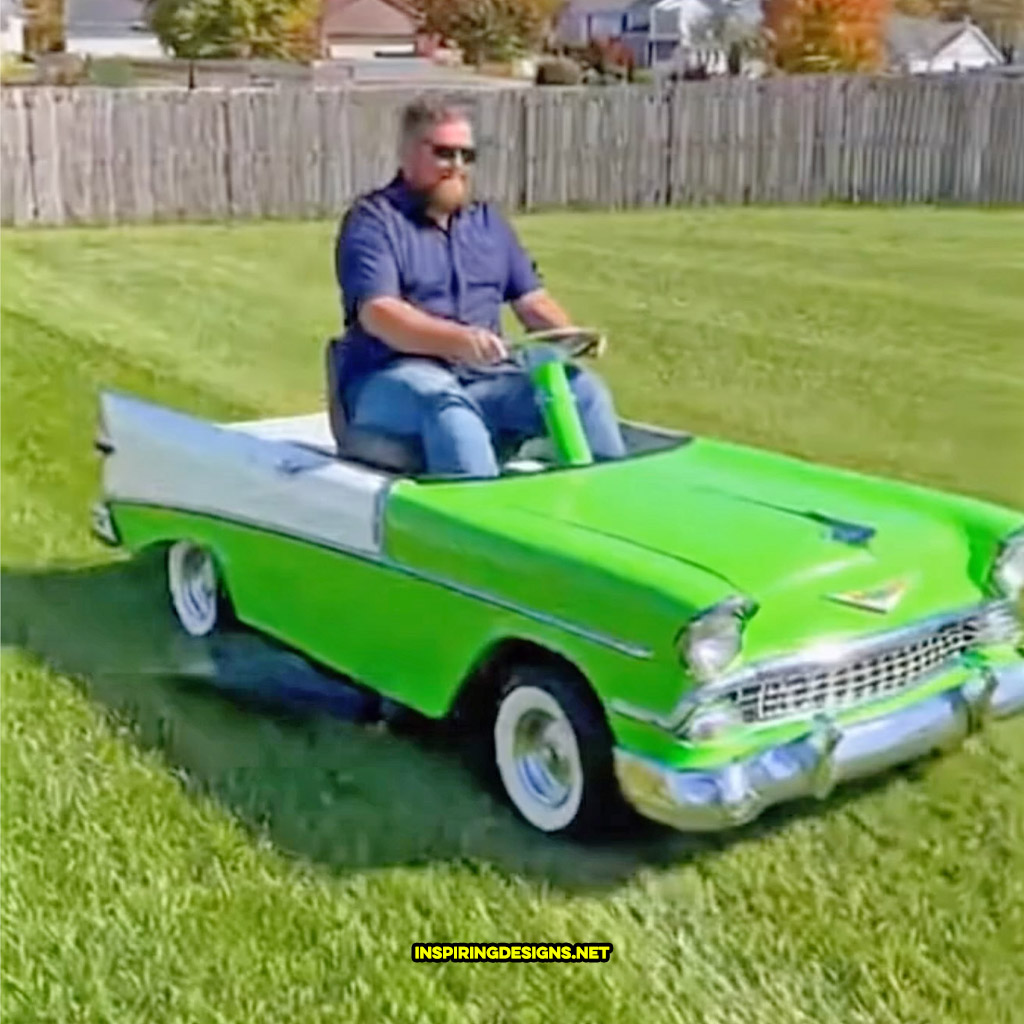
How They Cut: Performance That Matches the Flash
The body may scream 1957, but the cut quality belongs in today’s backyard. Hydrostatic drive gives smooth acceleration, the deck height adjusts in seconds, and the blades deliver a crisp, even finish. Many owners report these mowers handle wide lawns confidently while still trimming close along beds and fences. Add the zero turn option for precise trimming in tight spaces and you can skip the follow-up string trimming in many spots.
Who They’re Perfect For
- Classic car enthusiasts who want a driveable showpiece that earns its keep
- Homeowners with mid-size lawns who like practical tools with personality
- Collectors curating a garage, barndominium, or man cave that needs a functional centerpiece
- Gift givers looking for a once-in-a-lifetime surprise for a parent or grandparent who misses the fins and chrome era
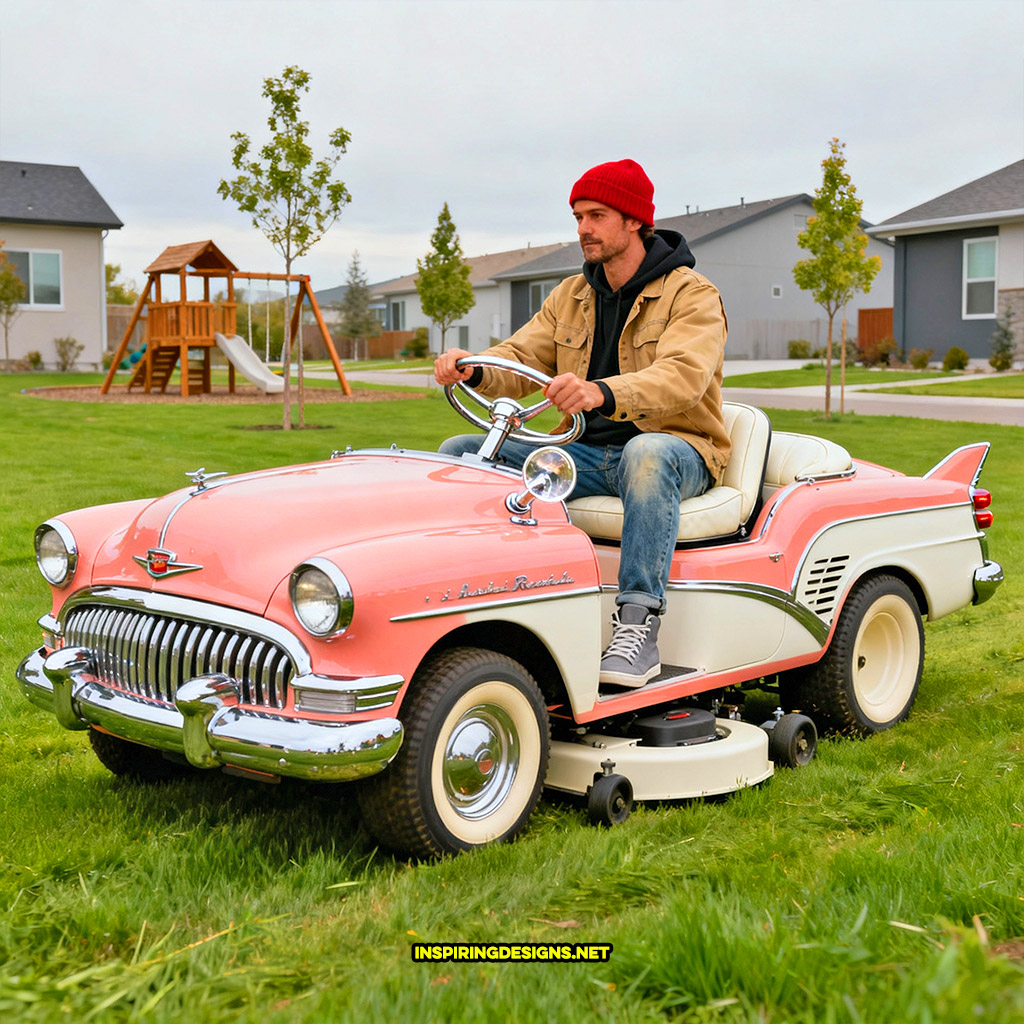
Buying Checklist: What To Look For
Use this quick checklist before you place a deposit.
- Body construction: Prefer molded fiberglass with automotive paint and metal trim
- Deck quality: Stamped or fabricated steel with easy height adjustment and washout port
- Power: Engines in the 15 to 22 HP range are the sweet spot for 30 to 42 inch decks
- Drive type: Hydrostatic pedal control on riders, dual lever hydro on zero turns
- Service access: Hinged or removable body panels for routine maintenance
- Lighting and switches: Real headlights with tidy wiring and a durable ignition switch
- Seat comfort: Padded vinyl bench with good bolstering and a stable driving position
- Warranty and support: Ask about parts availability and paint touch-up options
Safety Considerations
They look like parade floats, but they remain lawn machines. Keep these basics in mind:
- Read the operator’s manual and follow deck safety procedures.
- Wear closed-toe shoes and eye protection.
- Keep bystanders and pets away during mowing.
- Avoid slopes beyond your mower’s rating.
- Let the engine cool before refueling or covering.
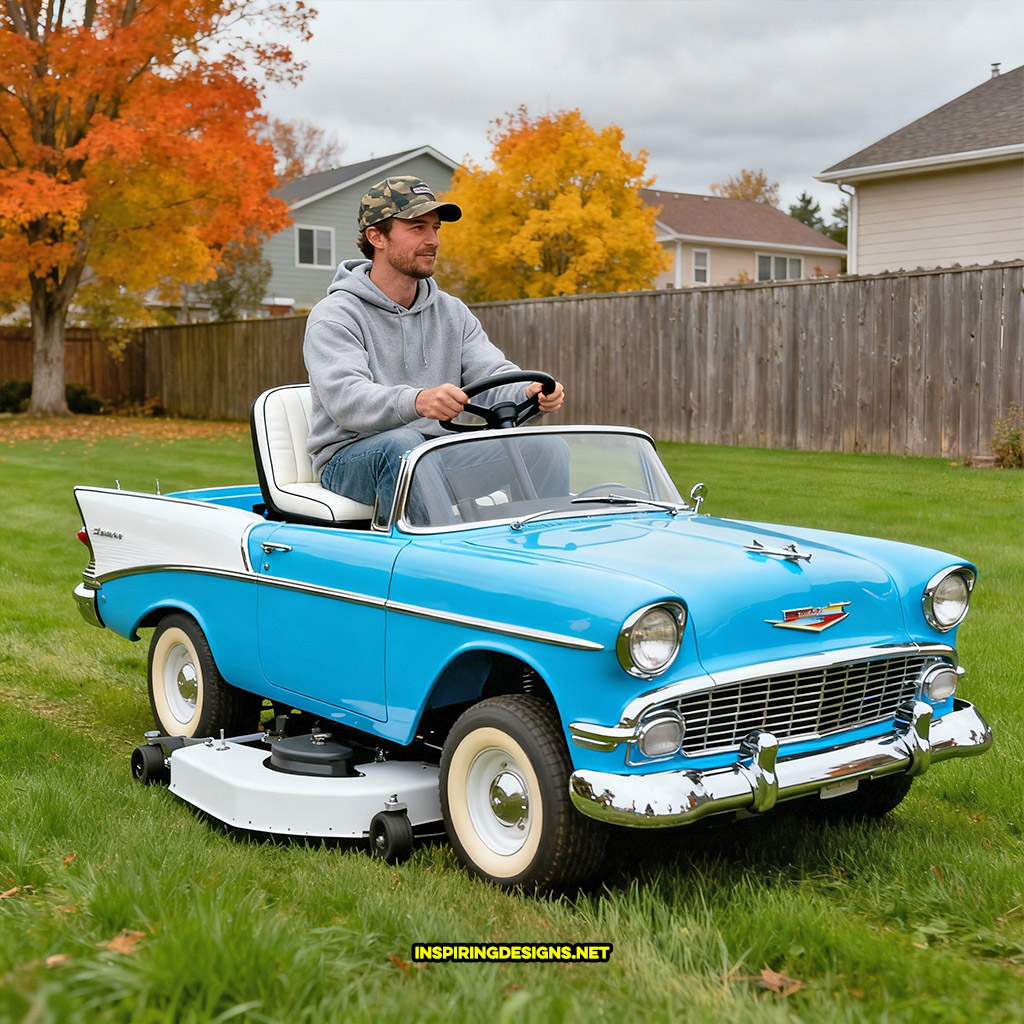
Care and Maintenance Tips
Treat your classic car riding mower as both a mower and a collectible.
- Wash gently using a low-pressure hose and pH-neutral soap. Dry with microfiber towels to keep the shine.
- Wax the fiberglass a few times per season with a quality automotive wax to preserve the gloss.
- Protect the chrome with a light polish and a soft cloth to prevent pitting.
- Service the engine per the manual. Change oil, replace air filters, and keep blades sharp.
- Store indoors under a breathable cover. If you must park outside, use a fitted, UV-resistant cover and elevate the tires off damp ground when possible.
- Touch up chips quickly to keep moisture away from underlying metal parts.
Popular Styles and Color Ideas
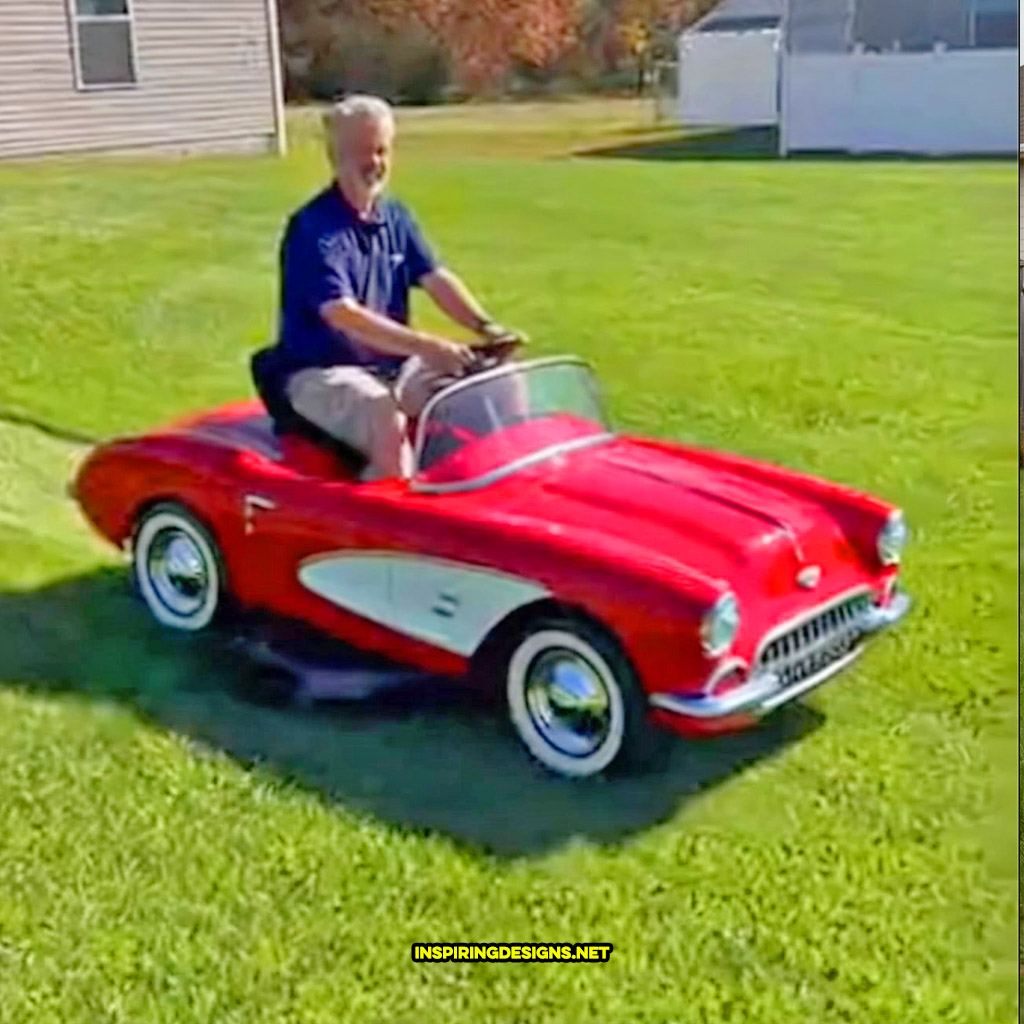
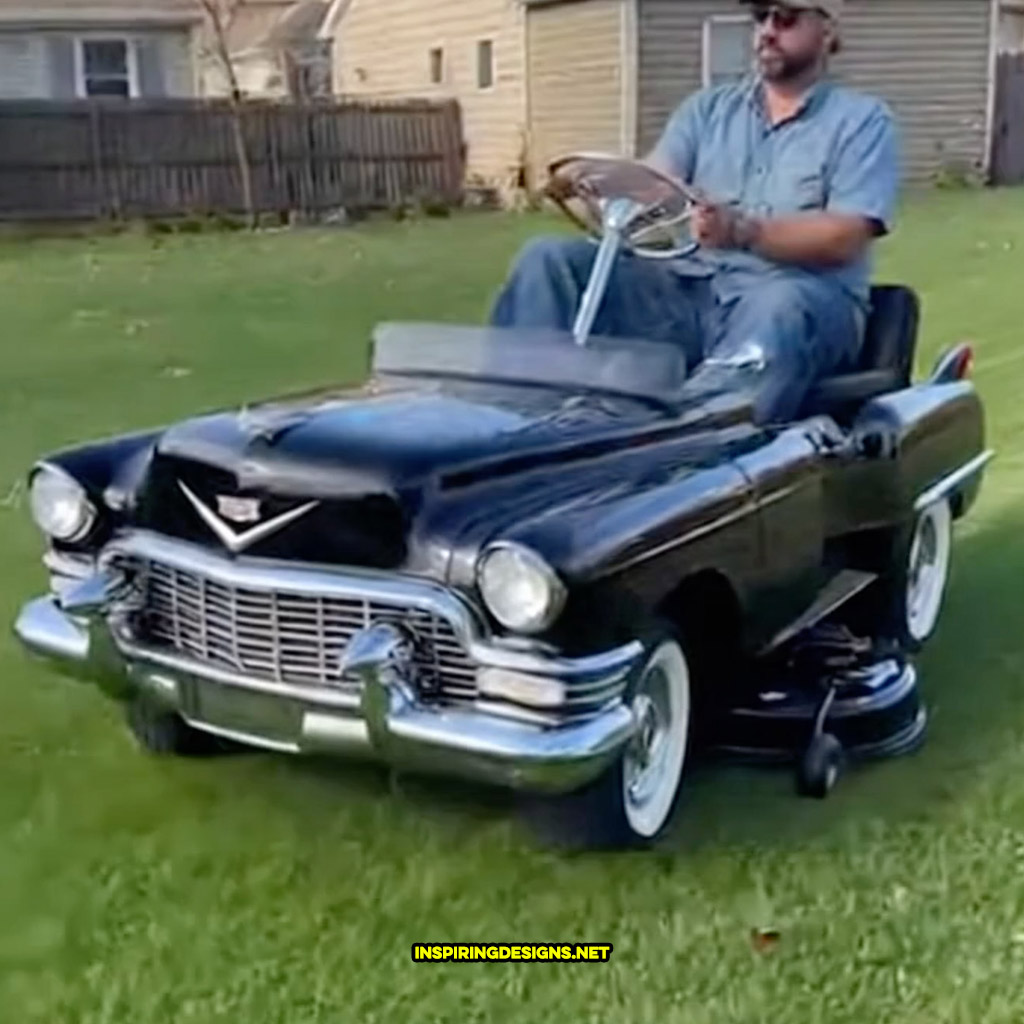
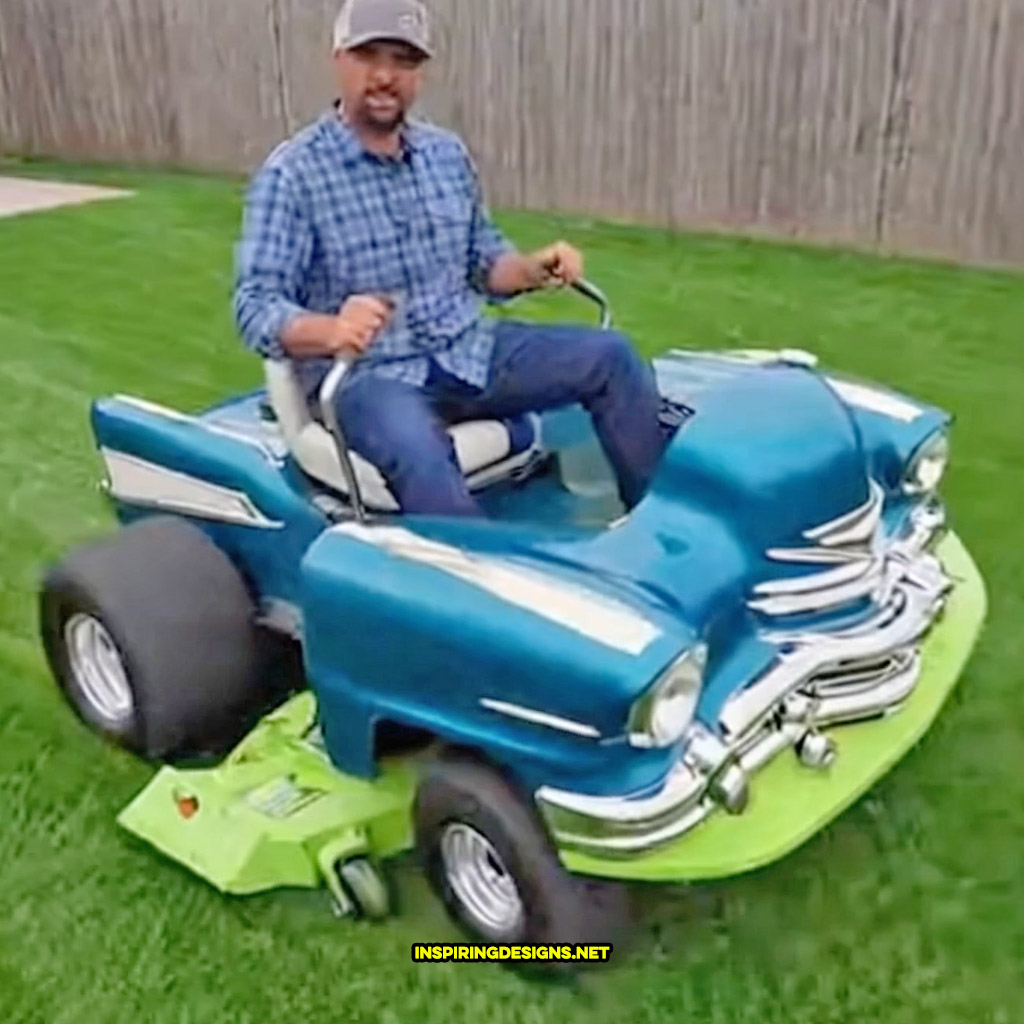
You will see designs that nod to icons like the 56 Bel Air, 57 Cadillac Eldorado, early Corvettes, and 50s pickups. Paint sets the personality.
- Seafoam green with cream inserts for that perfect soda shop feel
- Candy apple red with white coves for a sporty roadster vibe
- Powder blue with white roof line for a cheerful ranch-house match
- Jet black with heavy chrome for a tuxedo look on turf
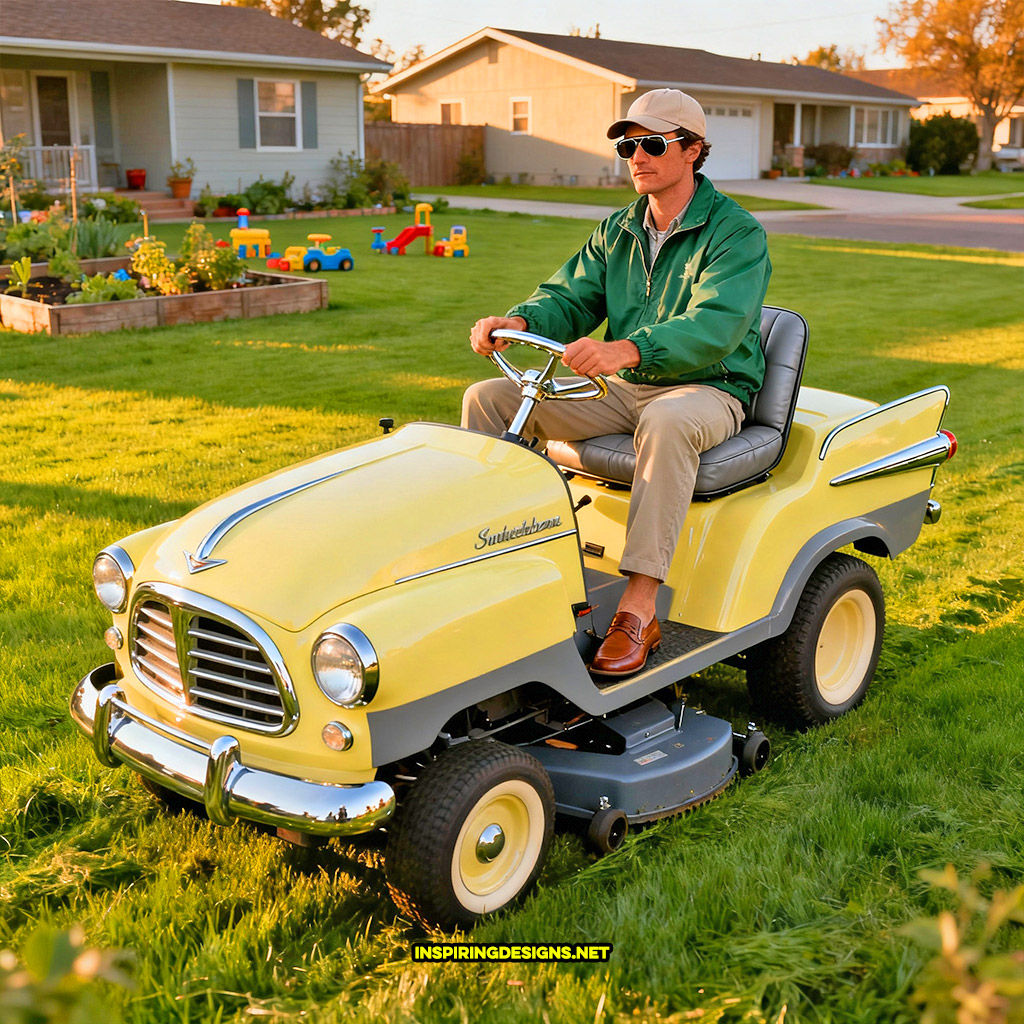
- Sunburst yellow with gray accents for weekend sunshine even on cloudy days
- Deep maroon with tan interior for understated luxury
Cost, Options, and What To Budget
Because many classic car riding mowers are built in small batches, prices vary by body style, deck size, and custom trim. As a general guide:
- Standard rider with 30 to 34 inch deck: entry level for smaller lawns
- Rider with 36 to 42 inch deck: mid tier for most suburban lots
- Classic car zero turn mower: premium for complex landscapes and heavy trimming
- Custom paint or extra chrome: add a bit for special finishes or bespoke touches
Ask builders about financing, lead times, and whether they offer trade-in credits for your current mower.
Practical Ownership FAQs
Do they fit in a normal shed or garage
Yes. Most are 60 to 72 inches long, 40 to 52 inches wide with deck, and around 36 to 42 inches tall. Measure your door opening and storage path to be sure.
Are parts hard to get
Mechanical parts like belts, blades, filters, and hydro components are usually standard mower items. Body trim is often custom but easy to maintain with basic care.
How fast do they go
Speeds are comparable to conventional riders. You get brisk mowing pace without feeling rushed.
Can I tow a small cart
Light garden carts are fine on most models if the hitch point and towing limits are respected. Check your manual for the exact rating.
Will the whitewalls mark the grass
No. They are turf-safe tires with a whitewall look, so you get style without scuffs.
Style Meets Substance: The Real Appeal
There is a special moment when you turn the key, the engine hums, the headlights wink on, and the blades settle into a balanced whir. You are not just mowing. You are piloting a rolling piece of Americana that happens to keep your yard immaculate. Every pass leaves clean stripes, and every glance catches chrome. That blend of past and practical is what makes classic car riding mowers irresistible.
Quick Feature Recap
- Vintage 40s to 60s styling with fiberglass bodies and high-gloss automotive paint
- Genuine chrome trim, bench seats, and whitewall-style turf tires
- Real LED headlights and functional dash switches
- Gas engines from 15 to 22 HP with hydrostatic drive
- Decks from 30 to 42 inches with 1.5 to 4 inch cutting heights
- Available as standard riders or classic car zero turn mowers
- Ideal for collectors, enthusiasts, and anyone who wants yard work to feel like a joyride
How To Choose Your First Model
- Map your lawn to decide rider vs zero turn.
- Pick a body style that makes you smile every time you open the shed.
- Match deck width to your gate openings and tightest spaces.
- Confirm service options for engine, hydro, and blades.
- Order your color and plan where it will live when you are not cruising the grass.
Bring one home and you will discover mowing days feel like a mini car show. The lawn gets trimmed. The neighbors get a treat. You get to relive the golden era of American design without leaving the driveway.
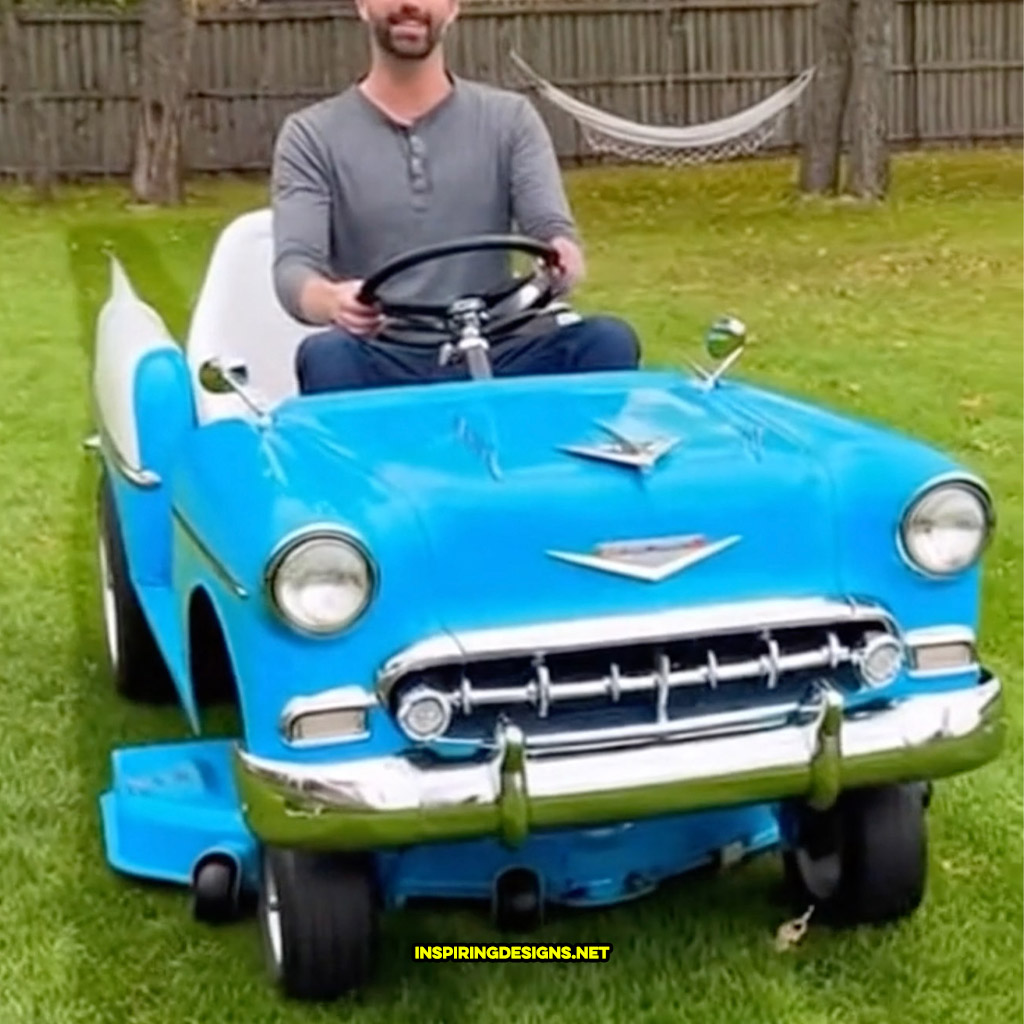
Lets check out some pros and cons to see if one of these classic car mowers is right for you!
| Pros | Cons |
|---|---|
| Unmatched curb appeal that turns mowing into a joyride | Higher upfront cost than standard riders |
| Real mower performance with 30–42 in decks | Small-batch builds can mean longer lead times |
| Hydrostatic drive for smooth, easy control | Heavier bodies may limit towing or steep-slope work |
| Available in rider and zero turn formats | Replacement body trim can be specialty items |
| LED headlights allow dusk or early morning mowing | Larger body shells need more storage space |
| Custom colors and chrome for a showpiece look | Paint and chrome require extra cleaning and care |
| Comfortable bench seating and automotive-style controls | Lap-bar zero turns have a learning curve for new users |
| Strong neighborhood and social media appeal | Attention can be distracting when you just want to mow |
| Uses common mower engines and service parts | Noise and fuel use similar to gas riders, not whisper quiet |
| Doubles as décor for garage or man cave when parked | Resale market is niche compared with mainstream mowers |